Long-form explainers on AI, organised by what you want from them: the must-reads, what you can run yourself, ideas worth learning, and what's new. How articles are scored
Newest. Everything, most recently updated first.
701 articles
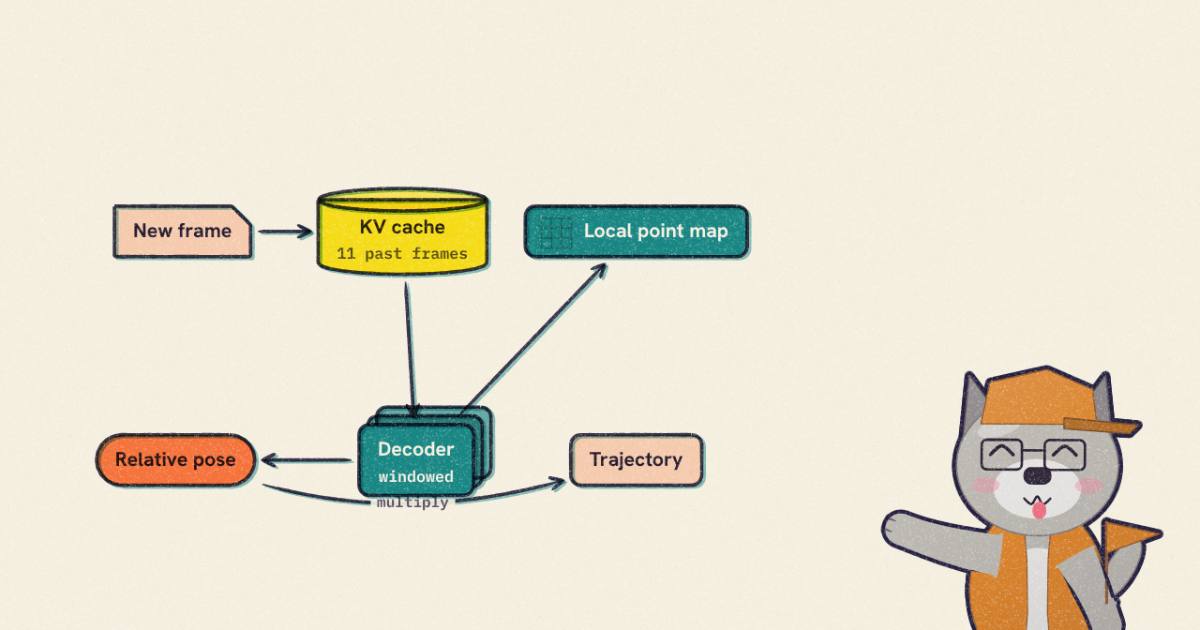
ABot-Recon: streaming 3D over thousands of frames with a 12-frame memory
Reads ABot-Recon's window, refiner and loop closure in code, and re-implements the cache, the pose chain, the composition loss and the pose graph on CPU.
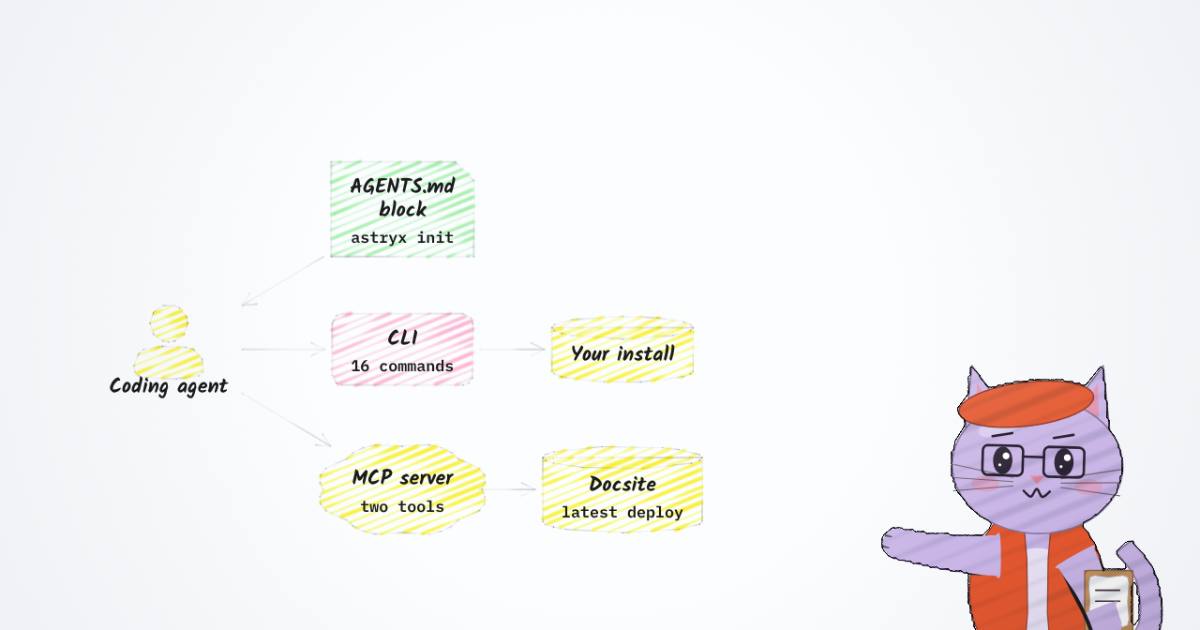
Astryx: what Meta's design system tells an agent, and how its search ranks
Counts what Astryx ships, then runs both agent channels, hosted MCP and the CLI, on the same 24 queries, plus doc sizes, init output and a version gap.
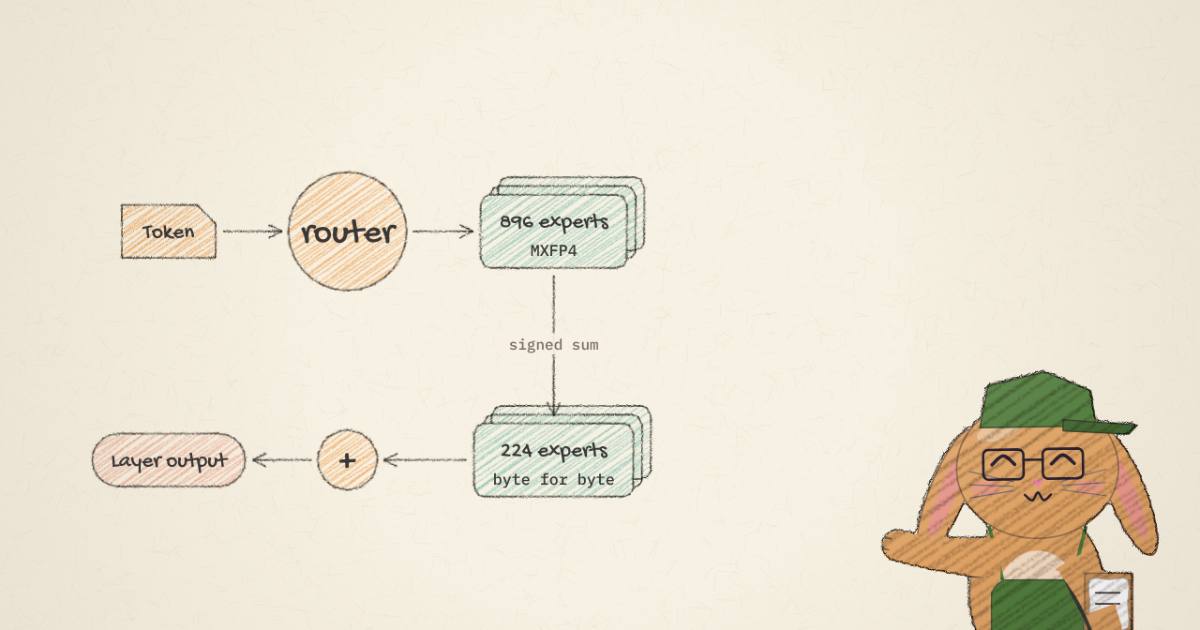
Kimi K3.1 Pro pruned75: three quarters of the experts, chosen without data
Confirms all 92 routers byte for byte, walks REAP's math, and prunes a real 16B relative eight ways on CPU: the shipped score loses to random.
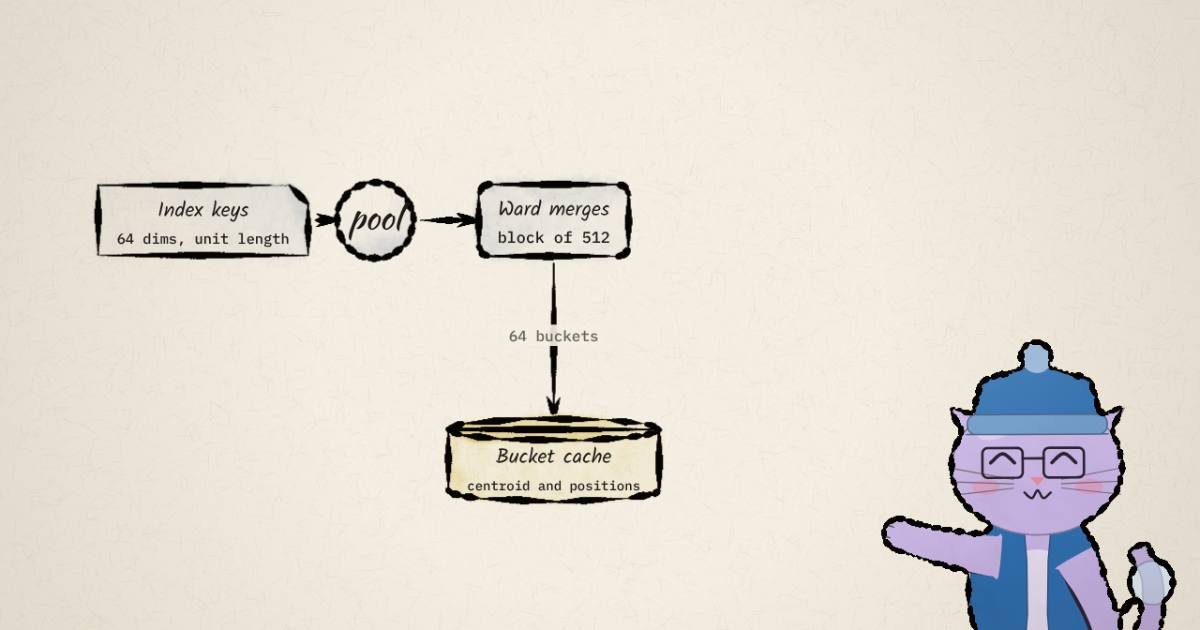
Latent Sparse Attention: stop scoring every key, score the clusters
How LSA's Ward buckets replace the key scan, the 98% recounted, and CPU ports of flat and tree that find the pooling and deep beams cost recall.
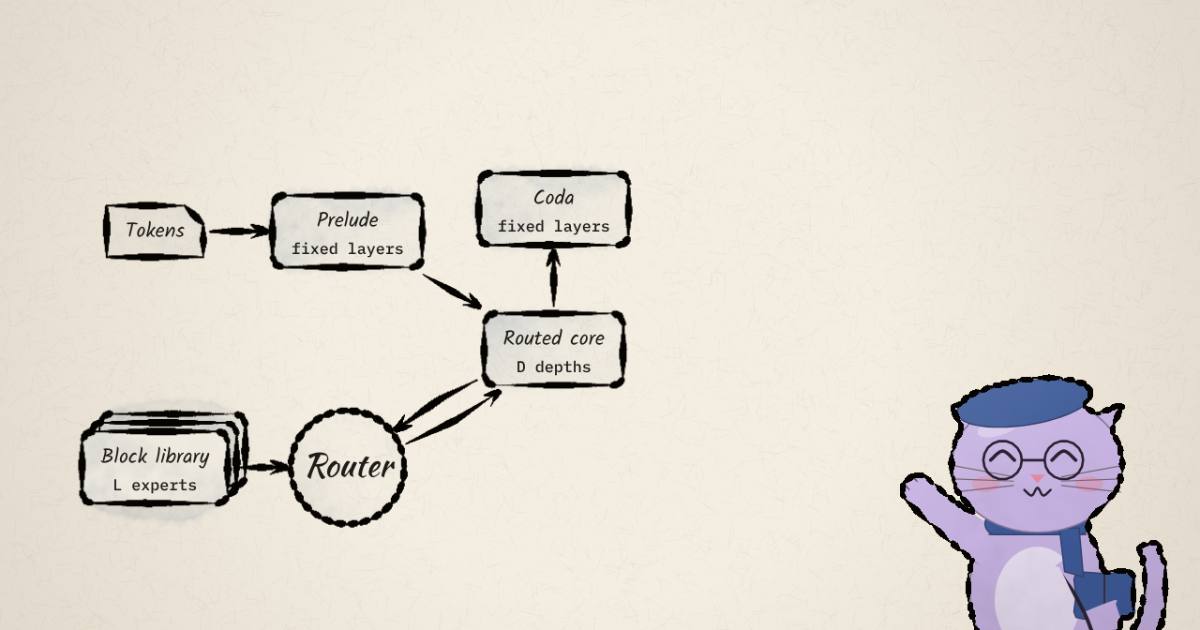
Library of Layers: a transformer that picks its own layer order
Walks LoL's forward pass and router code, checks its MoE match, and runs 53 CPU toy runs: given routing transfers, five learned-router schemes do not.
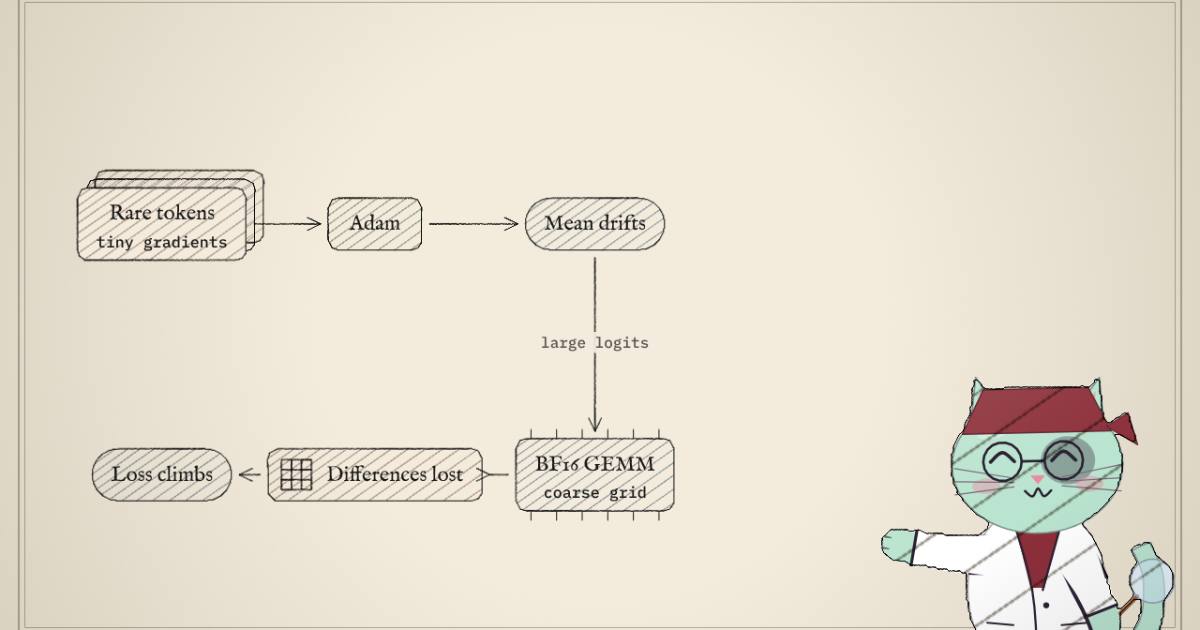
Time-bomb loss spikes: Adam drifts the LM head, BF16 pulls the trigger
Drift, rounding, fix, injected drift and lead time measured in a CPU toy of the head, plus a code read; the 28M-1.4B runs are reported, not re-run.
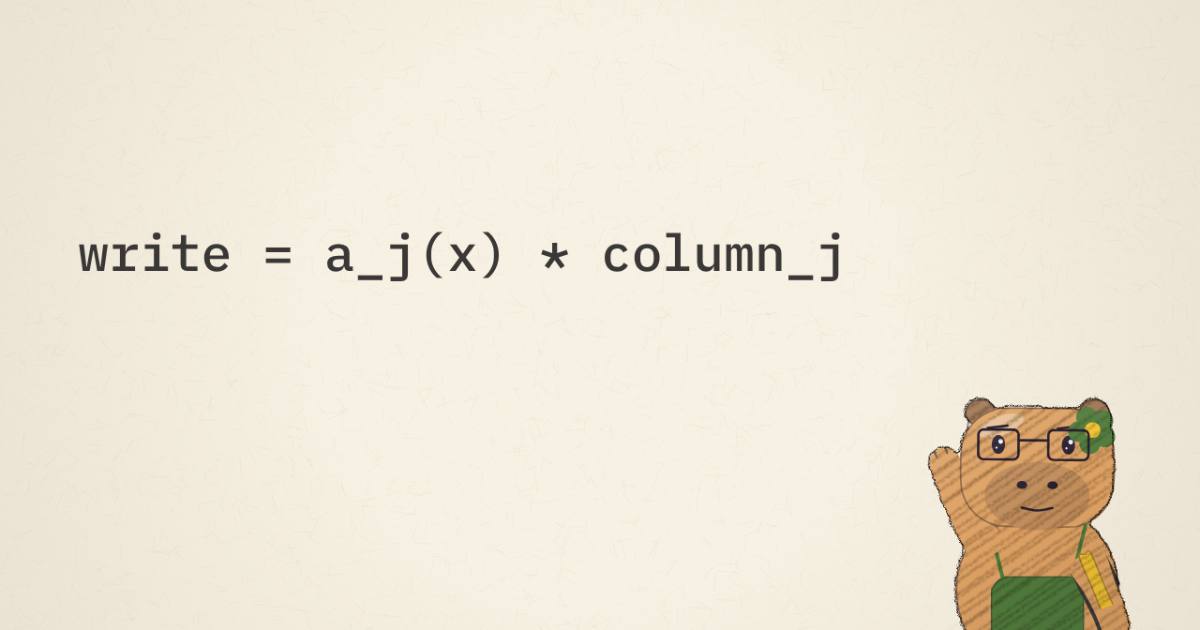
Neuron tuning: fine-tune eight neurons, and measure what else moves
Recomputes its 0.90 correlation, re-measures the LoRA gap on its own reference text, and ablates K, layer 0 and the filter on CPU: local, but facts spread.
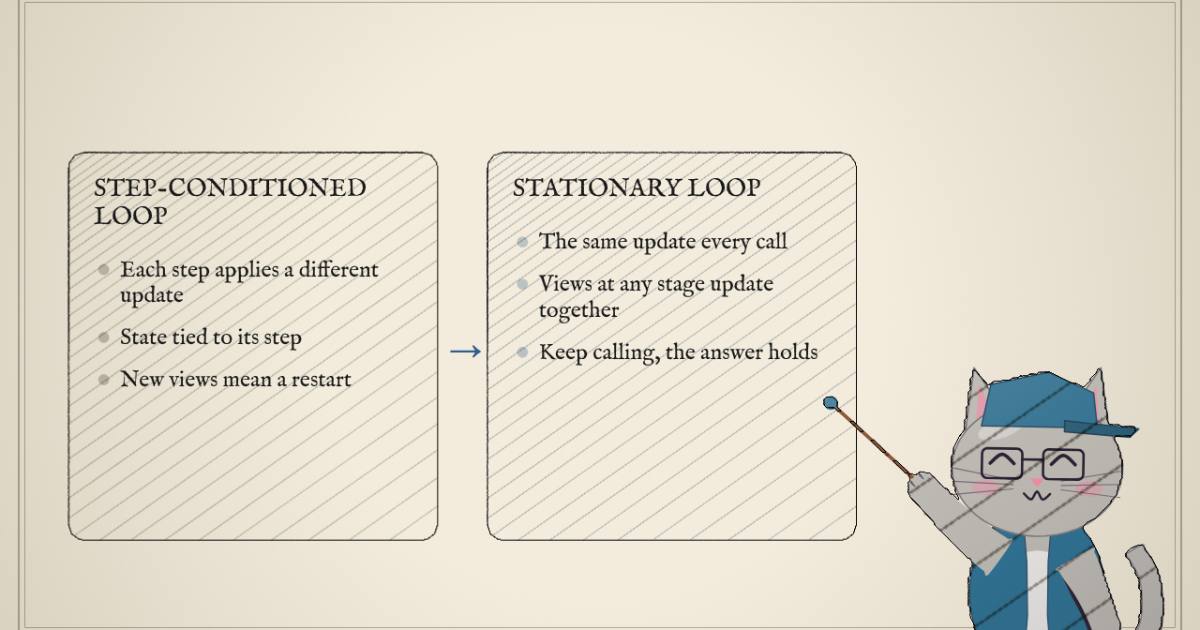
Solv3R: a looped Transformer that keeps solving a 3D scene
Solv3R's stationary looped block run from the released weights on CPU: convergence, ablations, continuation and 8-view block solves measured on real photos.
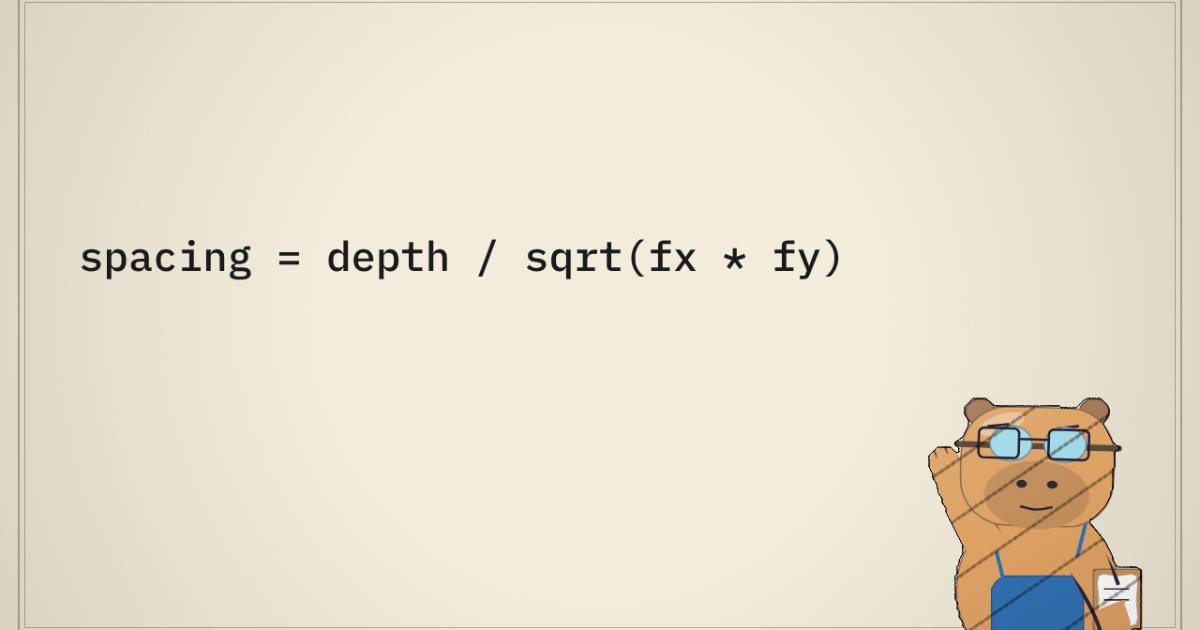
SplatAnything: one scale factor, chosen so neighbouring Gaussians sit one unit apart
Ports the release's normalization and merge to numpy, measures sky drift and output growth, and recomputes all 182 cells of the paper's main table.
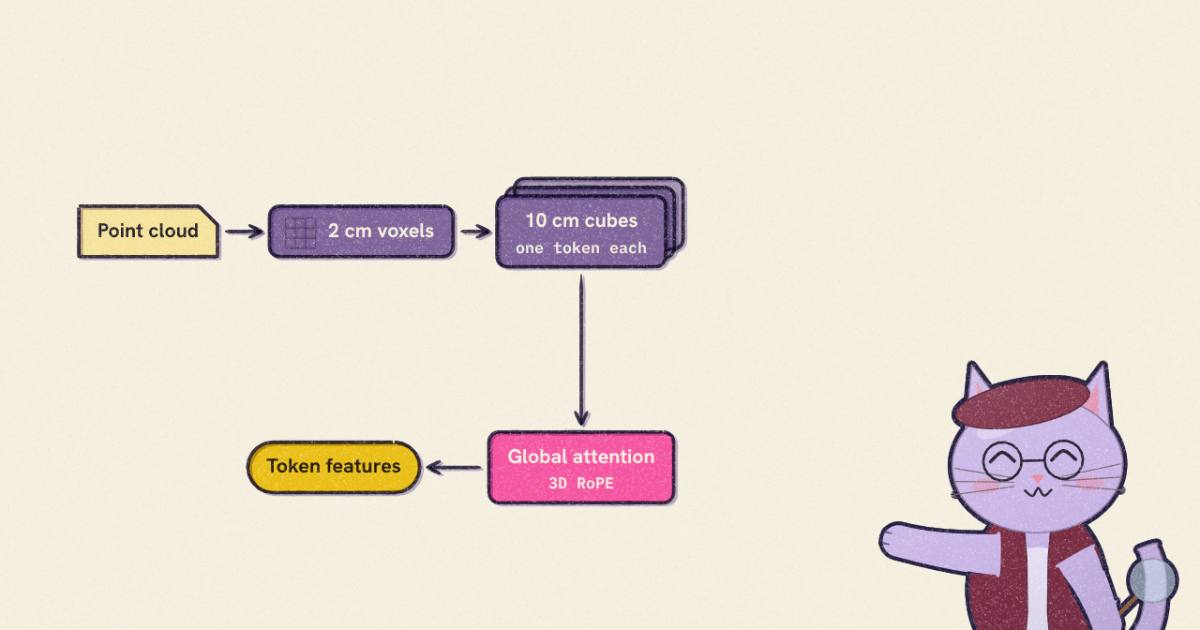
VINO: self-supervised 3D features from a plain volume transformer
How a plain ViT over voxel patches and four leak-plugging changes push 3D self-supervised features past PTv3, with token counts and tokenizer norms measured.
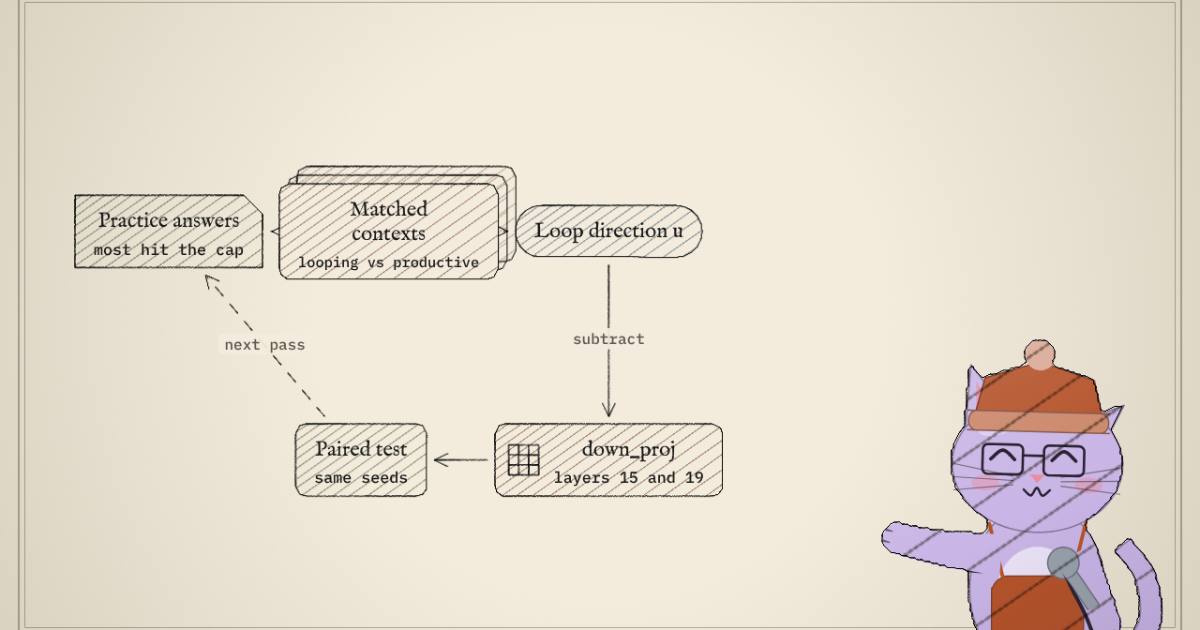
Weight-space programming: what the agent's 131,072-weight edit to Qwen3.5-0.8B actually is
Diffs the edited and base Qwen3.5-0.8B bit for bit, reads the agent's log, and measures loops in published and CPU-run samples next to the critics' claims.
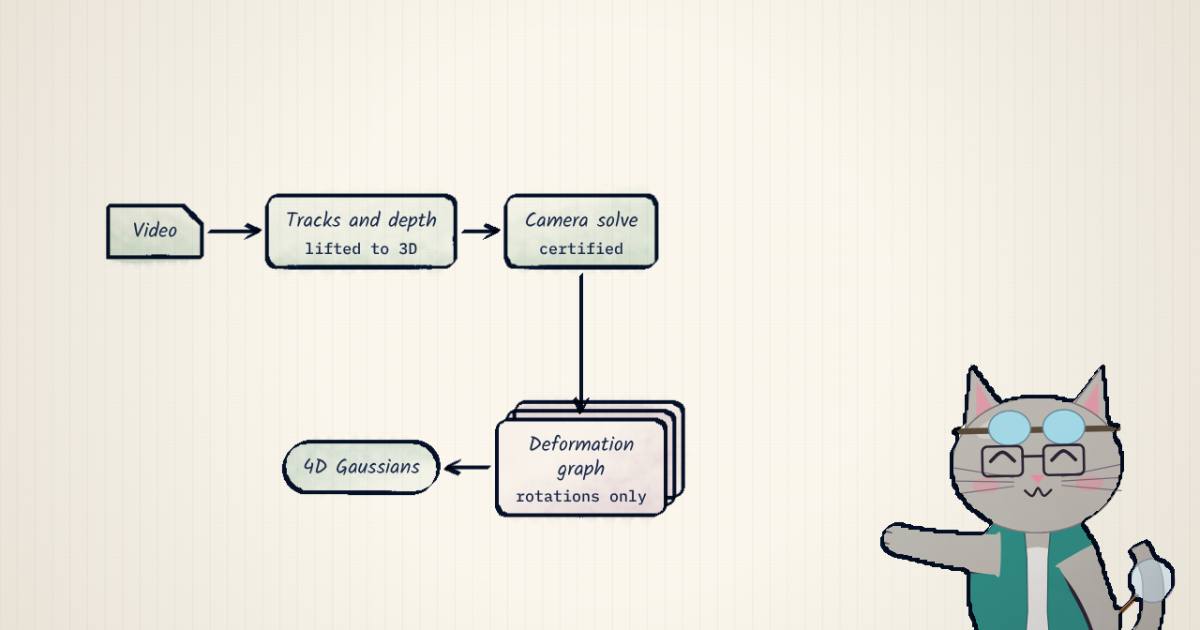
3D reconstruction roundup 3: five releases, and what you can actually check
Five 3D releases checked against their own tables, a recomputed Trainspotting split, the LaMAria board, and a certificate toy in numpy.
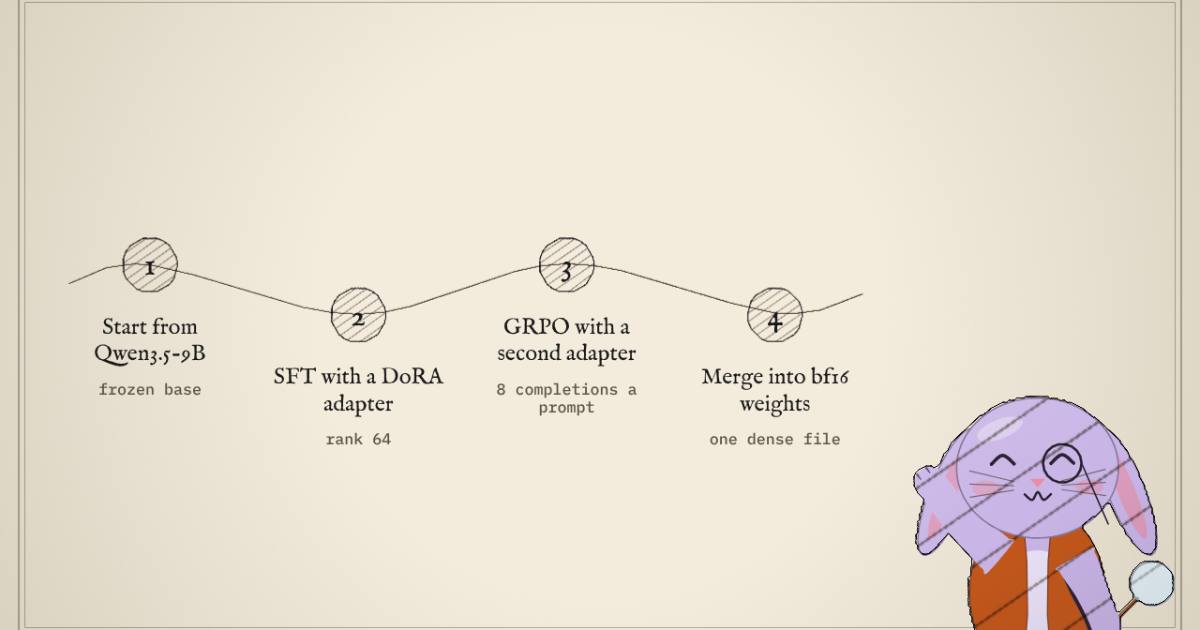
Alpie Seed 9B: what a fine-tune of Qwen3.5-9B changed, one bf16 step at a time
Both checkpoints compared tensor by tensor by range request, six matrices decoded in full, all four chat templates rendered and tokenized. Model not run.
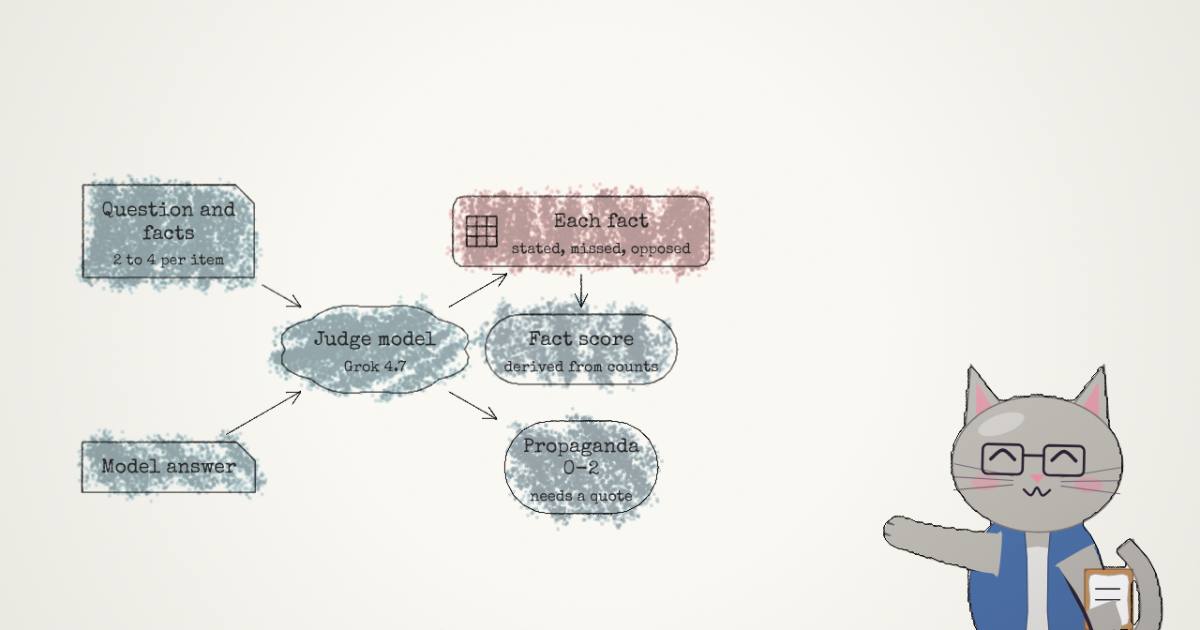
Arete-27B, read from the files: an 803-prompt judge eval, 29,236 teacher answers and a sub-1% weight change
Counts Nous's values eval and SFT set, finds two overlapping score rules, ties 52.8M tokens to the data, and diffs Arete against Qwen by range read.
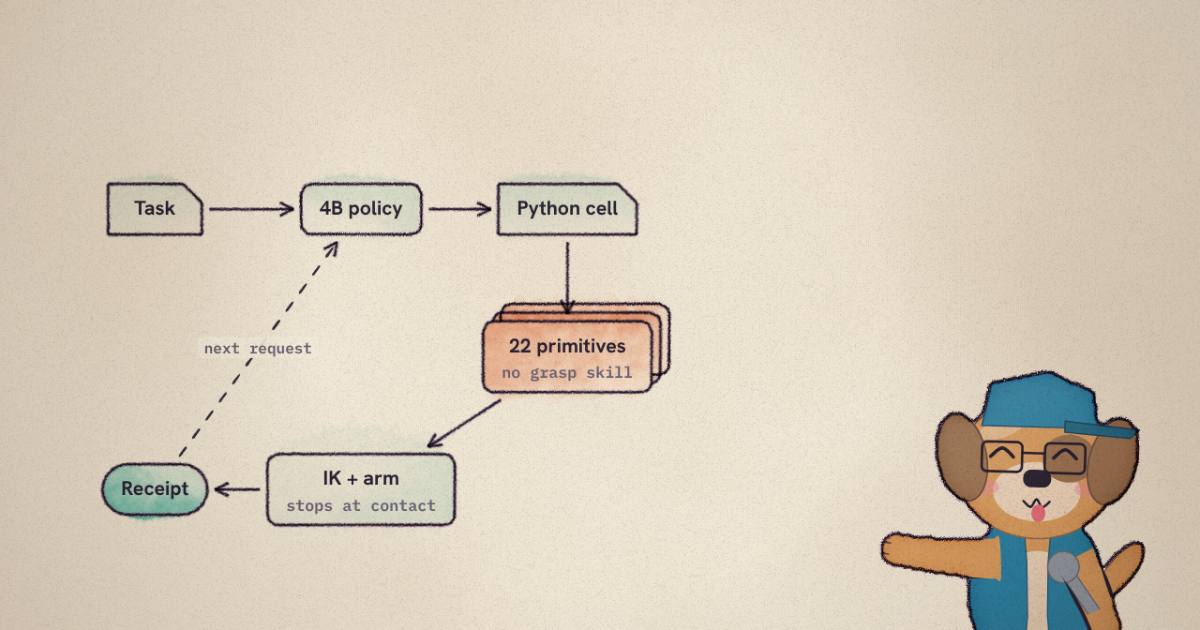
CaPtain: a 4B model that drives a robot arm by writing Python against IK
Re-implements CaPtain's IK and critic credit on CPU to show where credit lands, and checks the 4B claims against the code, config and weights.
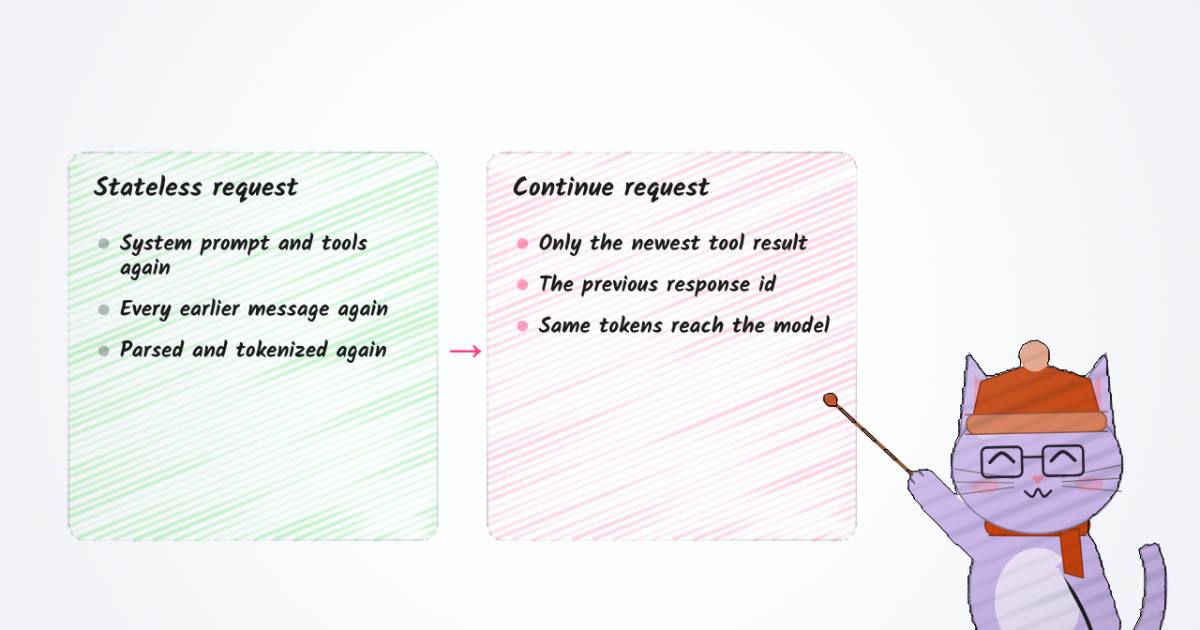
Message threads on the Claude API: what you stop uploading, and what you still pay for
Reads the threads docs and the SDK helper, measures request bytes with the real SDK against a mock server, and separates the upload win from the bill.
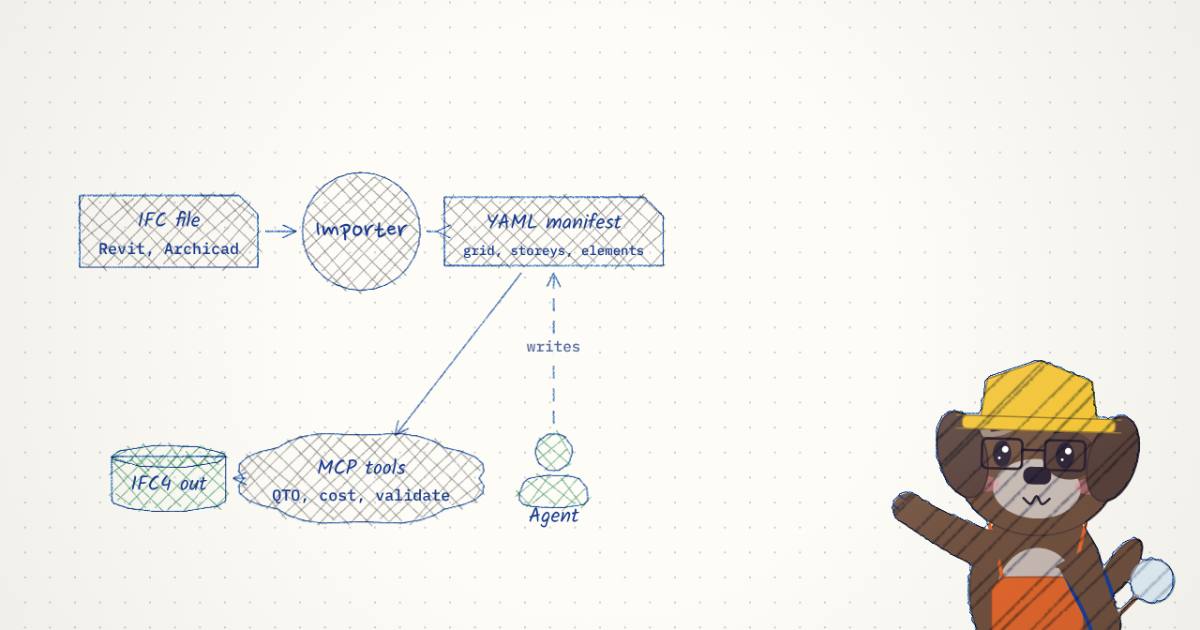
debim, read and measured: a YAML building language, a lossy IFC importer, and a fidelity score an empty frame passes
Reads debim's IFC importer and benchmark code, measures tokens and loss on public samples, and shows its 85.5% fidelity score sits below an empty frame's.
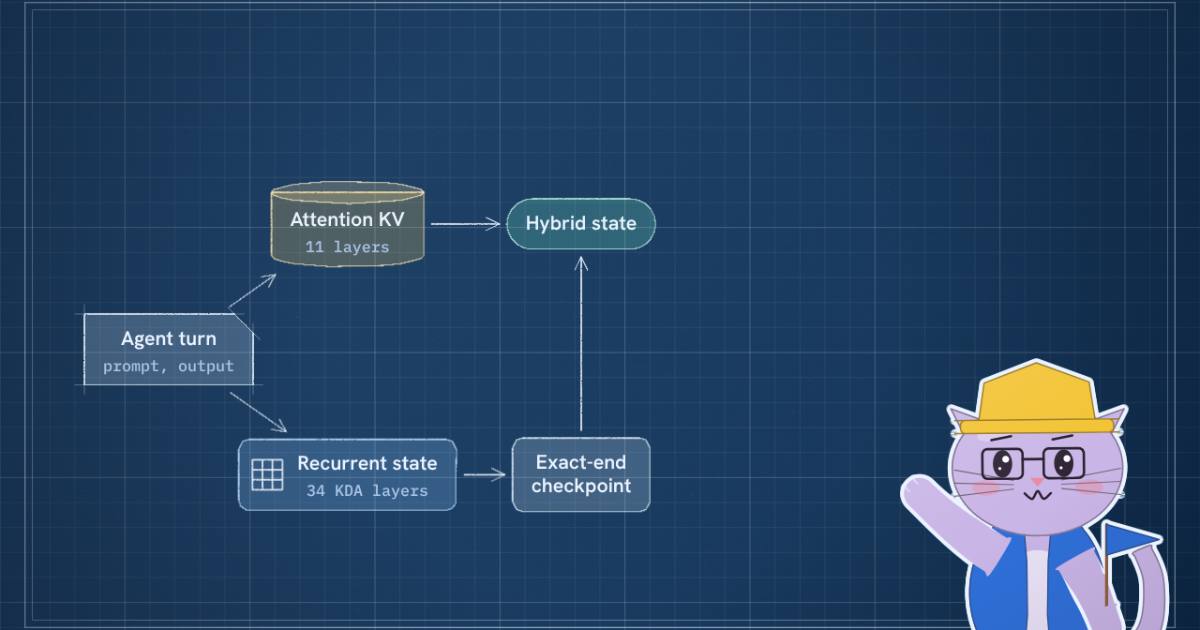
FlashState: where a hybrid model's next turn resumes
Derives GLM-5.3-Flash's checkpoint cost from config, reconstructs the profit and user-cost math, and replays the paper's trace through a cache simulator.
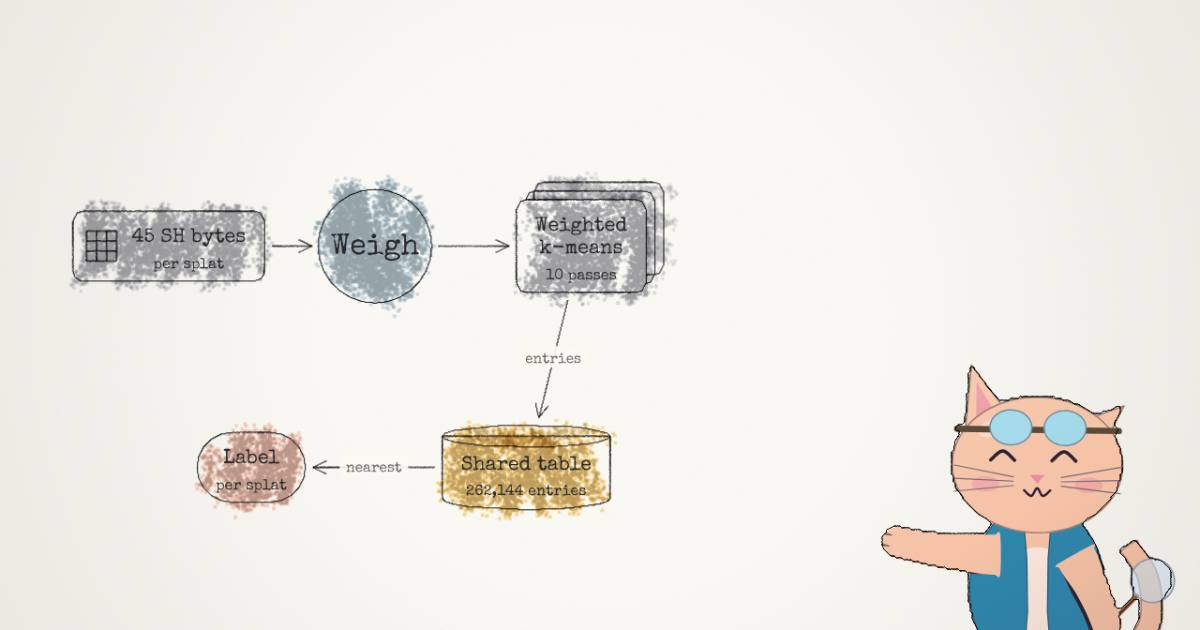
Gaussian-Splat-Lite's SH codebook: where a 55.6% smaller RAD file comes from
Reads the RAD converter, re-implements its SH k-means on a real 1.07M-splat scene and measures the size-vs-error trade, including when it loses.
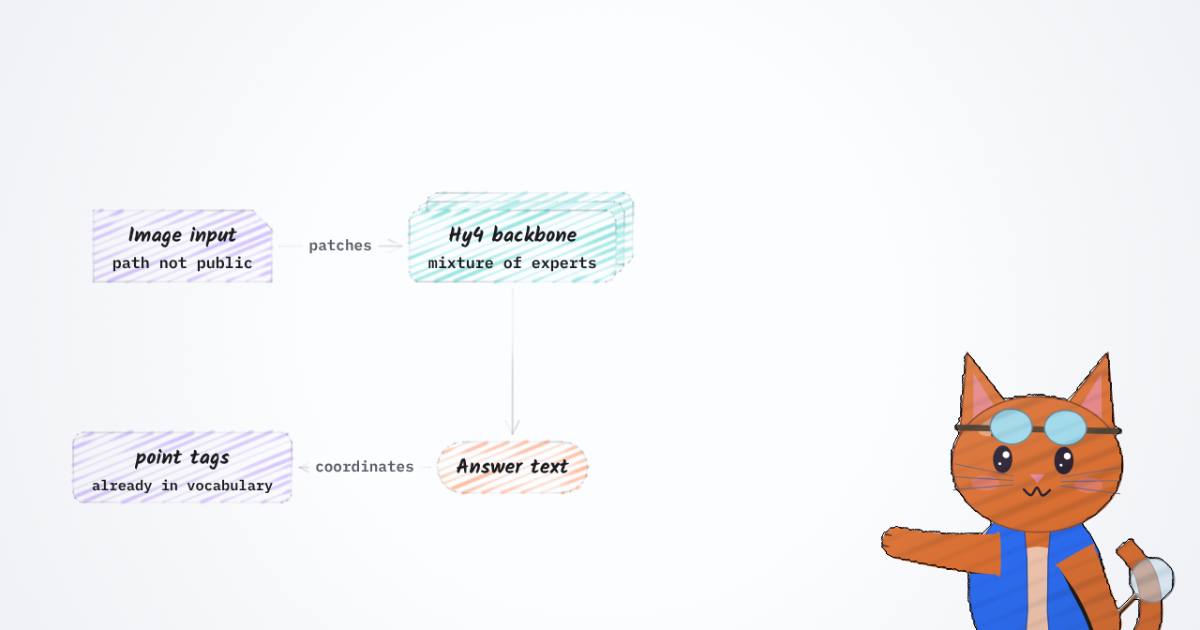
Hy4: what the full release changed, and what it did not ship
No weights shipped, so this counts Tencent's own numbers three ways, runs the preview tokenizer, and measures the one endpoint.
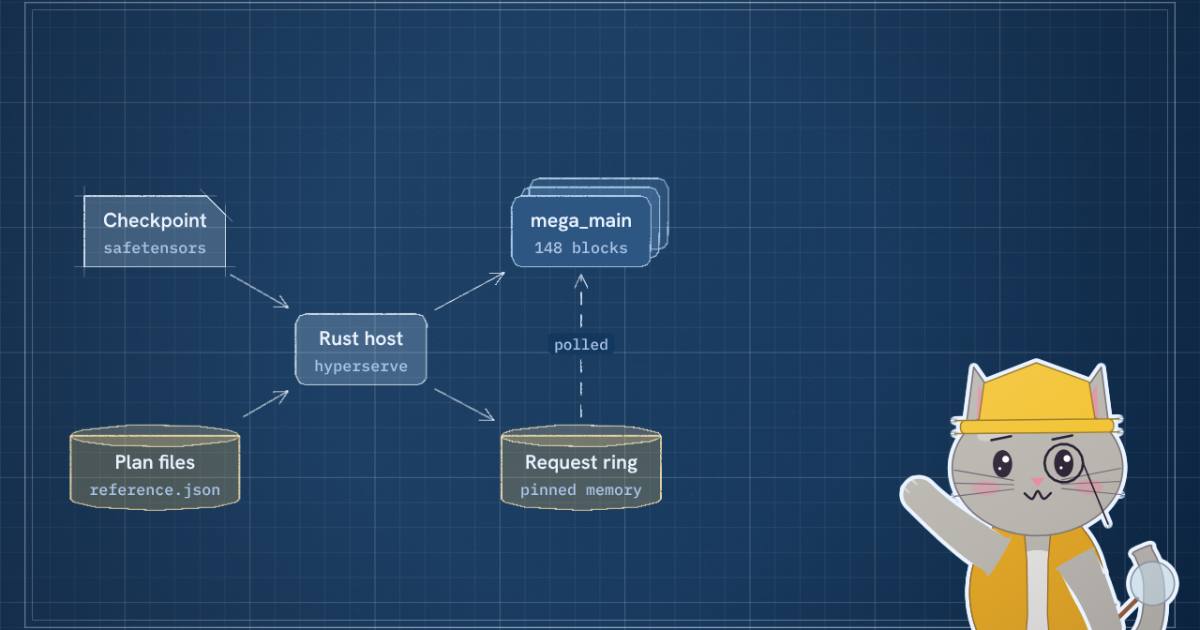
Hyperkernel: 42 megakernels for B300, and what the release lets you check
Parses all 42 shipped B300 cubins on a CPU, reproduces the 30.6% training MFU, and separates the thread's claims from what the repo backs.
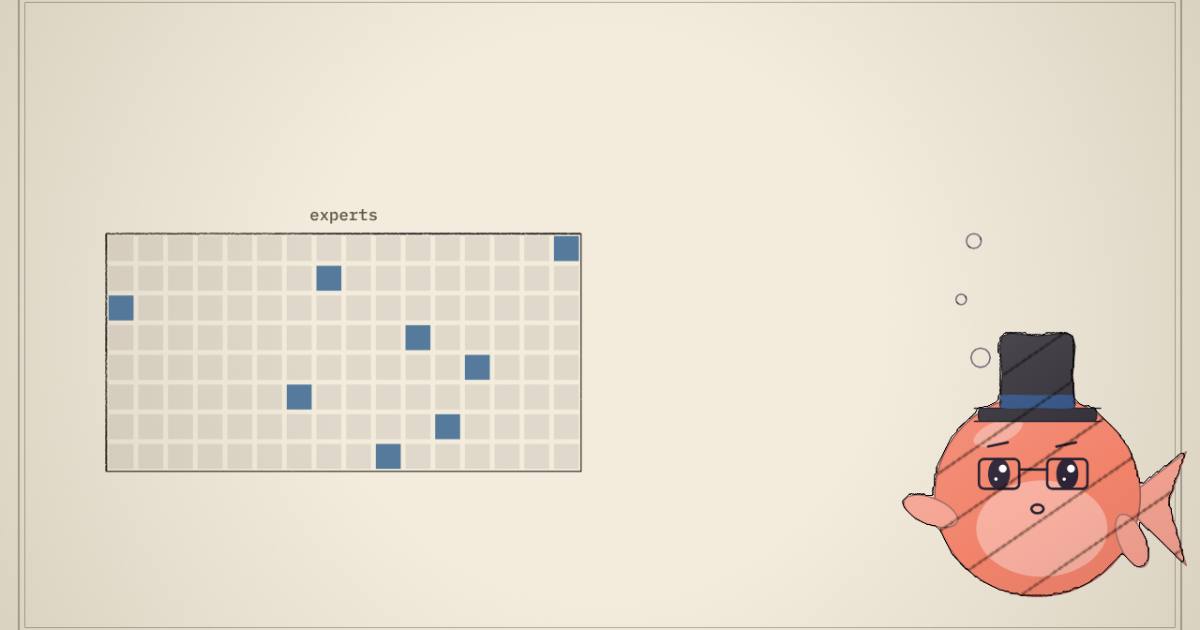
Inkling 2 Small: a 594B MoE from 12.6T tokens, checked against its own numbers
Rebuilds Inkling 2 Small's compute from the post's token counts (RL matches 8ND) and solves its expert layout, calibrated on Inkling-Small's real config.
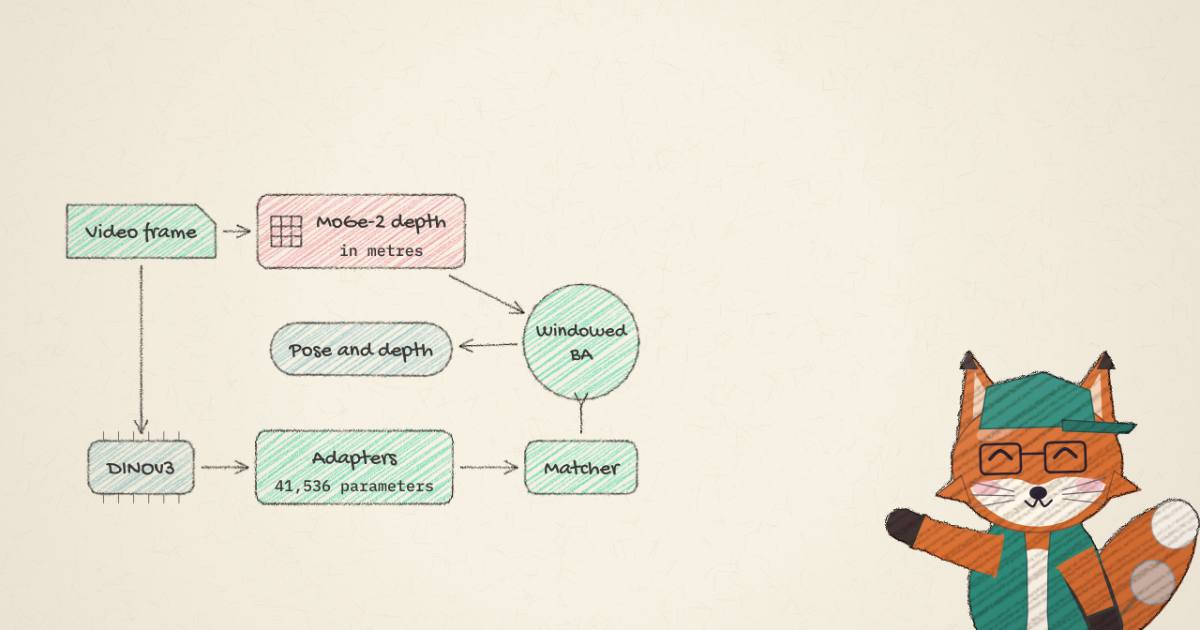
MetricTrail: a single-image depth prior turns DPVO into a long-video pose estimator
How a metric-depth Huber factor stops DPVO's scale drift, read from NVIDIA's code, measured in the checkpoint and rebuilt as a CPU toy.
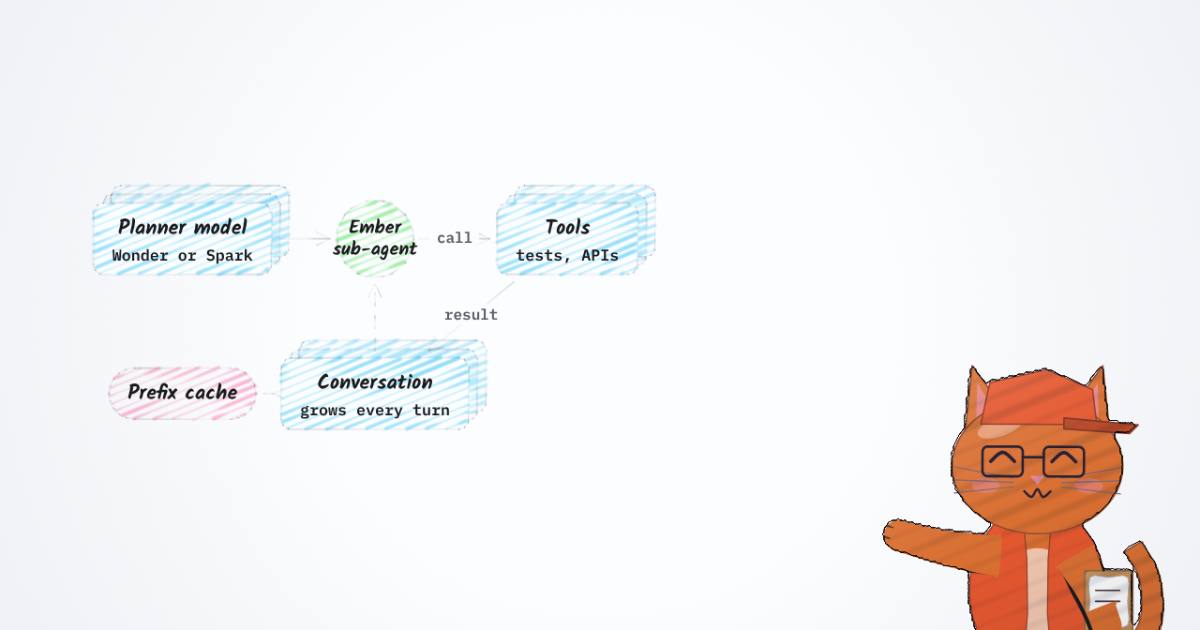
Muse Ember: where "a third of the cost" comes from
Splits Muse Ember's 'a third of Haiku's cost' into tokens and cache price from AA's data, rebuilds its 36.02, and puts noise bars on Meta's table.
all 701 articles, newest first
- OOOSplat: a phone video to a Gaussian splat on your own machine, and which parts are its own
- Open 3D Skills: building an exploded view by the instructions, and what the 60 fps recorder actually does
- Computers compiled into Qwen, the second wave: a GPU, a filesystem, a lab and an x86 core
- qwen-warp and llamAmpere: two RTX 3090 engines for Qwen3.8, and what each one calls the same answer
- Qwen3.5-4B-GLB-3D-Coder: 417 exported GLBs, every one valid, almost none to scale
- rea-video: reverse-engineering a finished video, and what its shot detector actually sees
- Ripple-65B Preview: a dense 65B from scratch, read from its headers and run on a DGX Spark budget
- SolidCraft, read: a Rust CAD app that agents drive through 21 MCP tools, and how exact its rebuilds are
- splat-walk: a Gaussian splat filmed by a simulated person on a simulated phone
- The time-smeared deer is not in God's Eye View: how the effect works, rebuilt and measured
- VisionSIM: render once, then lie to it like a real sensor
- anidoodle: a drawing skill that is 3.3 MB of TypeScript, and what I could check without running it
- Construct 1.0: an agent writes a scene, a stdlib exporter writes the glTF, and nobody checks the hinges
- dsh-superagent: an issue-and-PR agent built to cost a team as little attention as possible
- Le Chonk's weights, read from the files: 1.05T, 52B active, and a 41 KB-per-token cache
- Qwen3.5-4B-3D-Coder: a 4B model, 4,146 teacher traces, and the scenes that actually run
- Scenario's kinetic-film skill: a launch film as one web page, and what 'reverse engineered' can mean
- StableGen: what runs in Blender, what needs a GPU, and what the rigger really does
- Steve's desktop CAD, read: an OpenCascade kernel, a Python feature API, and an optional Blender
- agent-desktop from the source: a desktop as refs, and what a snapshot costs in tokens
- Bun AOT and --trim: what the compiler removes, and what a run showed
- The calculus of interfaces: compiling a layout into one formula, and what survives
- Codex from the source: the harness, crate by crate, and what is and is not open
- Drex Max: d3's shape on the same Qwen base, a readout that is Qwen's own output rows, and a licence with a one-million-dollar line
- Fused Zip-NeRF from the source: the kernels, the bytes and the speedup claim
- Splat to Blender with Claude: two MCP servers, a six-step loop, and what it costs in image tokens
- GOFish: Gaussian splats for a whole fisheye image, and a mesh from the same scene
- Hexels: what a hexagon with a colour ramp buys a splat, and what it does not
- Idol: the image-to-splat model, and where its three seconds go
- LayerFS: 157 snapshots, a toy, and then the real store
- LEANN's 97% storage saving, taken apart and run
- LFM3-1.7B: what "tri-hybrid" means in the config, and what it does to the cache
- LFM3-Omni-2B in a browser tab: what the WebGPU Space actually loads and what it costs per second of speech
- Finding the neuron you asked for: neuron-finder's two screens, and a CPU re-run
- Neuron lens: what a neuron's weights say, and what steering it does, checked on a 0.6B model
- Metatron v1: a 100-million-parameter humanoid policy, run on a CPU
- OmniRay: any lens, one image, and a ray field built from three rotations
- PyTorch 2.15: the NCCL rewrite becomes the default, and what a CPU box can check
- Qwenputer: a RISC-V computer compiled into Qwen3.5-4B, and what its memory actually is
- SAM 3 as four ONNX files: what the export pins, and what I ran
- Scenario's 3D OS: counting the 80 skills and what is in them
- Soft-MTP: the one line that keeps the self-distillation and drops the noise
- Spark-X2.6-1.7B: a million-token window from one full layer in four
- switch: the agent loop for a model that cannot write a tool call, and what it does when the model is wrong
- three.js meshlets: what the GPU-driven pipeline does and does not copy from Nanite
- Unlimited-OCR-2: the 512-token budget that reads 416
- Tell your agent to optimize your web fonts: I ran the prompt's claims on three real fonts
- WeVisOne-VL-4B: boxes as tokens, mattes from a 9.6M decoder
- Xiaomi-OCR-0: what a 0.8B document parser's headline number covers, and what its training did to Qwen's weights
- Clover-35B-A3B: how a diffusion model gets to 680 tokens a second, read from its files
- Delta-Matching: the one number that lets attention train in FP8
- Nemotron 3.5 Transcribe: 33.7 B stored, 3.6 B read per token, and what it costs to listen
- Coarse-to-Real C2R#: faking video pairs from image pairs
- cpu-chat and covert channels between agents: what shared hardware lets two sandboxes say to each other
- Cyberpunk 2077 in a browser tab: what an unofficial port's own page source shows
- Echo-3, taken apart from the outside: a room scan as 7.3 million flat discs
- Gemma 4 E2B on vLLM: reading the eight PRs behind the 2.85x
- HiP3R: one scene from thousands of frames, and what each of its two graphs buys
- Neuron lab: steer a language model's neurons in your browser
- Neuron steering: find a neuron, scale its write, measure the damage
- MotionBricks: a three-network motion generator you can read from its headers
- On-policy self-training: a model writes its own problems, and the answer goes in the teacher's context
- Rivet 3.0 and WarpDrive: S3 as the only dependency, and what the open tree shows
- Road Rash in a browser tab: a 1996 game's tables, rebuilt in Three.js
- Auditable AI text detectors: a sparse autoencoder under the verdict
- Claude Code's sandbox from the source: the bwrap argv, the seccomp program, and the proxy
- Qwen, minus the e: a mask removes the letter, training has to write the rest
- Nanbeige4.3-33B: a teacher first, and a cache you pay for
- Qwen4-27B: what a merged kernel PR does and does not leak
- Slotstream: a 103.8 GB model on a 48 GB Mac, and what 21 tok/s is made of
- A fix for softmax and cross-entropy: the target gradient that rounds to zero
- 3D Model Anything: an iPhone scan, an agent, and a photo it keeps comparing against
- Dessa: timing a speech-only conversation model from its own demo tracks
- Generative Trajectory Planning: a diffusion prior that proposes plans and learns from the ones search finds
- Hy-Nomas: an 8.6B world model whose memory is a KV cache, and what it takes to fit a 4090
- The integer-multiplication exponent race: from 2^-182 to 2^-14.6 in forty hours
- Kimi K3.1 Pro: the same 2.8T model, more RL, and what the −65% counts
- d1-ultra: the calibration claim, recomputed from the index's own bins
- Mojo and MAX source release: the whole stack is readable, and two licences cover it
- Nemotron 3.5 Bolt E4B: Gemma 4 E4B, retrained for talking robots, in a 4GB file that weighs 6.18 GB
- An Intel Arc Pro B60 on an M1 Max over Thunderbolt: the weights were never the problem
- Project Maya: GLM-5.3-Flash on two 2017 GPUs, and what the 40 tok/s is made of
- sam3-segmentation: the win is the tiling, not the agent
- sandbox-runtime: Claude Code's sandbox is a mount table, a missing network and a proxy
- The week of 14-23 October 2026: php2shell, a poisoned LiteLLM, a CVSS 10 in GitLab, and eMudhra's weak CA keys
- transitions.dev's Generative effect: an agent animation drawn from the element's own geometry
- 3D reconstruction roundup 2: old geometry, bolted onto feed-forward models
- AI Playground Home Agent: the compute stays home, the conversation doesn't
- BlenderWorld: 223 Blender briefs, graded by an agent that opens the .blend
- Carbon-X: teaching Qwen3-14B to read DNA in 6-base words
- Cua Spaces: one daemon per computer, and I ran three of them
- d3-turbo: the state stops looking at the question, so a photo is read once for 255 questions
- DeepInfer: DeepSeek's serving engine, and a throughput chart that multiplies by 3.25
- DeepSeek-V4.1-Flash-1017: every byte retrained, nothing else touched, and what two DGX Sparks can hold
- EAGLE-4: speculation that prices itself, and where the 5.21x comes from
- EmbeddingGemma 2: the encoders are optional, the text model is not
- Flint: 125 tokens a second is what 2.5B active parameters buy at 273 GB/s
- fx0: the artifact builder is the demo, the durable agent loop is the product
- gpu-lexer: how a 28 KB model lexes in parallel, and where the 3.8x came from
- hatchzip: unzipping into the space the archive gives back
- Ideogram Vector: 40 sample SVGs opened, and what they say about how it draws
- Learnable Spectral Activations: stop picking frequencies, learn how to mix them
- Ling-3.1-flash: a 560B hybrid-attention MoE, counted from its safetensors headers
- Looking Ahead: teaching a chunk-by-chunk video model to predict two seconds out
- Mercury 3: a diffusion LLM at 1,068 tokens/s, and where the 4-8x goes in routed traffic
- Ming-3.0 speech models: one 0.5B speech engine inside five checkpoints, run on a CPU
- MiniMax M3.1 Flash: M3's shape, all-sparse attention, four-bit experts, and Space Bunny unmasked
- NFSMW Online: Need for Speed Most Wanted in a browser tab, read from outside the login
- NFS Most Wanted on itch.io: EA's 2005 speed.exe, recompiled ahead of time to WebAssembly
- NVX: Microsoft's micro-VM sandbox builds the machine up from nothing
- Open Math Harness: a capability kernel for maths agents, with Lean as the only judge of a proof
- openai/math: 372 claimed theorems, 26 million lines of Lean, and what the green tick means
- Ornith-1.5: the model writes the exam, builds the marking scheme, then sits it
- Pele: Mermaid diagrams without the DOM, and where Mermaid's milliseconds actually go
- Reactive optimizers: an agent that rewrites updater.py while the model trains
- RLCR and Avalon-M1-Mini: training a whole agent organisation on one shared reward
- SGLang HiCache: the KV cache as a memory hierarchy, and a 98% that the workload sets
- SKY-001: plan the part tree, draw the build, and lead CAD by 0.6 points
- SpatialScout: a VLM drives the camera, submits 40 points, and is graded by a moved box
- StableReinforce: what Tinker's new off-policy loss publishes, and what it keeps
- Improved strong stochastic flow maps: a smooth stand-in for the Brownian path
- TorchTPU: PyTorch on TPUs as a real device, not a lazy tensor
- TrackEverything: dense 3D tracking that grows with the scene, not the video
- TV launcher rebuilds: what the agent actually runs over adb
- Activation checkpoint offload: moving the last per-layer tensor off the GPU
- Bitcoin 0.1, rebuilt byte for byte: reading a 2009 build machine out of its executable
- earshot fit: a sound file in, a Python recipe out, and no neural network in between
- FOR-species20K at 85%: a tree's point cloud as seven pictures, and the source shortcut under the score
- Kimi K3 on GB300: 13 kernels a layer, and what 842 and 423 tokens a second measure
- MegaBake: a PyTorch model compiled into one CUDA kernel, and what its 5.5× is measured against
- Nemotron-Labs Dory1.0-4B: one 20-layer block, run up to four times
- OrcaCyber Zero 1.5: four security benchmark claims, read against the boards they came from
- Perplexity SPACE: a Firecracker microVM per agent task, and the keys stay outside
- Reflection Beam: a 501B open MoE that spends 23B per token, and what its efficiency chart measures
- ssftalk: an ElevenLabs-shaped API over a formant synthesizer, benchmarked against typed-in numbers
- SteadySplats: teach the Gaussians to agree, and a one-sample splat renderer stops boiling
- Virtual Head Attention: train with sixteen heads' worth of queries, serve plain GQA-2
- 3DCodeVerse: 2.03M rows of 3D code, and a harness whose score is capped by a ruler
- Fish Audio Drama 3: a Qwen3.5 MoE that reads stage directions as plain text
- InfiniSplat v2: the points stay where Depth Anything 3 put them, and opacity does the cleaning
- Langevin Flow Maps: a force field that learns its own integrator
- pplx-decider v1.1: the causal mask comes off in 16 layers, and your state is billed once per question
- Prompt caching in coding agents: where eight harnesses put the breakpoint
- RSI-Inference Bench: the 26.7% is ten tasks, and the agents beat the maintainers' fixes
- RSI-top: a dashboard and a diverse cohort for autoresearch runs that stall
- speech.cpp: six speech model families in one ggml binary, built and heard on a shared CPU
- Timestral: Mistral's 209M forecaster, read from the code and run on two CPU threads
- Zephon in TorchTitan: the same global batch on 8, 16 or 64 GPUs
- Atria Dawn: GLM-5.2 underneath, and what its four launch numbers count
- Bonsai 2 2B, 4B and 9B: where the bytes go when the model is small
- Comet 60B: Nemotron 3.5 Super VL with half of every expert pool cut
- Datadog's Scout: RL on simulated outages, and what "as strong as Fable 5.1" rests on
- Hesai Kosmo: what a 1535 nm lidar adds to a Gaussian splat
- Hy Memory: a 3B-active memory writer that ties Opus 5, and four launch numbers that belong to the engine
- Jais 3: adapting K2 Horizon to Arabic without touching the tokenizer
- MAI-Base-2: Microsoft's 2.8T base model, and whether its compute numbers add up
- Muse Spark Open: 816B on two Mac Studios, and what the arithmetic needs
- PanSt3R: one set of queries for every view, so the chair keeps its id
- Spirula Studio deleted its dependencies instead of wrapping them
- Step 5 Preview: 92 narrow layers, and a sparse indexer that scores blocks of 8
- Terminal-RSI: the second cycle, and how much smaller it is
- Blender 5.3's Gaussian splats: a point cloud that Cycles can hit
- FastH3 Preview v1: four calls, one-tenth the attention, and what the 14x actually measures
- FLUX 3 Image Klein: a 5.55B DiT that reads its layout as JSON
- Jev alternatives, week five: decision models built for the shape of the decision
- Matrix-Game 4.0: a 5B video model re-skins a low-poly game at 60 fps
- Nemotron 3.5 Super VL: 88 layers, eight of which remember every token
- PS5LM: a 27B model on a PlayStation 5's GPU, checked against its memory bus
- SANA-WM: a minute of camera-controlled world, and where its memory actually lives
- SpatialLM: a room scan in, a floor plan out as Python
- Scion: why 30,000 merges a day broke git at Anthropic
- FineEnvs multilingual: 12 million RL tasks from two datasets, and what a character-error reward teaches Gemma in Kannada
- LFM2.5-24B-A2B: thirty convolutions, ten attention layers, and a 2B that is 2.45B
- Tev-Gym: build the answer first, then grade every step
- UltraBERT-Embed-150M: the new part is the masking, not the block
- Ultramarine 1 Flash: RL on a board memo, graded by 31 sentences
- AA-3D: what 10,000 blind votes on three.js scenes can and cannot tell apart
- Astronex-World 1.0: a world model trained on two L20s, and what its cache really holds
- BudgetPix: a pixel diffusion model that reads its own first draft to decide where the tokens go
- Data-space iteration: a four-step image generator that never asks what time it is
- DiffusionART: why DiffusionNFT needed EMA, and the 12x that follows from fixing it
- Dust: every token is a member of the population
- fsearch: whole-disk search on a Mac, and what the 17,000x is measured against
- GroundingPI: a 4.84B grounding model that answers in 1,000 coordinate tokens
- The Jacobian lens: reading the residual stream with a derivative
- MiniCPM-V 4.7: Qwen3.6's own brain, new eyes, and experts read off a phone's flash
- μLattice: an open Spotlight-style memory, and what its 7,280x counts
- Muse Wonder: what the two points behind Opus 5.5 are made of
- Natura-1: a whole robot episode as one token sequence
- OpenTakeoff: an agent can trace the floor, only a person can ink it
- QwenGyre: training agents whose rollouts take four hours
- ReplaySSM: an SSM decoder that writes its state once every 16 tokens
- Representation Guidance: a pixel diffusion Transformer that guides itself with its own bottleneck
- Streaming Code World Model: the proxy can arrive live now, the pixels still can't
- SubQ Snap: what 'constant compute per token' has to mean, checked against what Subquadratic published
- usd-brep: NVIDIA open-sources SMLib, a million-line NURBS kernel with a USD schema on top
- Xiryn: every agent gets its own Linux desktop, and a vault it fills without reading
- Jev alternatives, week four: the week decision models learned where to run
- PersonaPlex: Moshi learns to take a system prompt
- RSI-Anything: the world model ranks, the policy learns, and they rarely meet
- StreamRender-H3: the engine paints flat colours, a 33B video model paints the rest
- VoiceStudio: local dubbing that holds up, on a default voice you can't sell
- AES in 106 gates: what Swapnil Jain's new circuit records beat, and what Lean checked
- Six AI short-drama generators, read: the face is held by a reference sheet, and the bill is the video model
- Anatomy: a Claude skill that draws machines, used to draw itself
- Clef-omni and Microsoft-Decision-1: open weights that hear video, and a closed model timed on a different clock
- DeepGEMM: the 300-line FP8 kernel grew into a 35,000-line library
- Invaria: a point-cloud encoder that doesn't care what grid you sampled at
- LobeHub's week of self-improvement: what 21 of 30 can tell you
- Oruk's looped speech model: 2.04B parameters folded into two blocks that run 52 times
- StructureGS-SLAM: closing drift on walls instead of loops
- Vivix W1: what $0.003 a second buys, and which half is interactive
- FreeMatching: a FLUX.2 transformer taught to say where every pixel came from
- Kronos: candlesticks as a language, read from the code up
- Strands Agents and Strands Box: Dogwood is a policy language, not a microVM
- Underdog Saluki 27B: ISTA's 2-bit file with its scales retuned
- AnyPS5: a PS5 game turned into a Linux program by relinking, not emulating
- Atlas Camera Studio: a camera rig for pixels that do not exist yet
- NullMoth's NVIDIA driver for macOS: Metal on an RTX card, by way of Vulkan
- Agent Memory Repo: Devin's dreaming memory is a git repo of one-line bullets
- Claude Dashboards and Claude Motion: two artifact templates, and what a hosted explainer changes for a pipeline like ours
- Claude Haiku 5.5: what "75% less to run" is made of
- Interfaze 1 Lite: the mixture of architectures is ten public checkpoints and a tool loop
- Karotte: an RL environment framework that keeps the answer key in the sandbox
- LayerRoPE: sixteen scalars that tell each layer how deep it is
- Open d1: two decision models with one name, one API and two different readouts
- lithos-metal: per-layer megakernels for Qwen3.8-27B on an M5 Max, and where the 200 tok/s comes from
- LittleBit: what a tenth of a bit per weight actually buys
- Mellum2.1: JetBrains' 2.5B-active coding agent, and which speed it is fast at
- MiMo's RL environments: the fix commit is still in .git
- MiMo-V2.6 RL environments: 7,780 tasks, five graders, and two judges you bring yourself
- Paradee: Kokoro's voice in 8M parameters, and a buzz that lived in the phase
- pplx-embed-v2-late: the shared space is between two model sizes, not two modalities
- REA, Reverse Engineer Anything: 139 MCP tools between your agent and a decompiler, each with a receipt
- Restore and relight LoRAs: teaching a generator to start from your picture
- RoomTSC: a room-temperature superconductor lab whose first result is a ceiling
- T3-Video: 685,440 tokens per 4K clip, and the window attention that makes them affordable
- UNREAL: one frozen LLM as both the retriever and the long-context filter
- vLLM-Omni: the request is unified, the schedulers are not
- Local coding models in Copilot on Windows: one model, three spec sheets
- DistScene: the whole room in one voxel grid, then a grid of its own for every chair
- FBTriton table-batched embeddings: the backward win is a threshold moved from 32 to 256
- GTA V in a browser tab: Rockstar's own engine, recompiled to wasm64 and WebGPU
- Impeccable: a design vocabulary for agents is mostly a linter with opinions
- A 320B MoE on a free Kaggle TPU: I audited the bytes, not the tok/s
- Kandinsky 6.0 Video: two token streams on one clock, and where the lip-sync comes from
- KV caching in flow models: a cache you have to train for
- Limite 1B - Violetto: the throughput claim is in config.json, not the blog
- Malena: how little harness a strong ML-engineering agent needs
- OpenQodex: thirteen scanners, and a reviewer that cannot skip a finding
- Squeeze3D: a borrowed 3D generator as the decoder, and what its 2,187x is made of
- Unsloth's decision-model trainer: a Clef head on any LLM, and what 20.7% to 74.3% measures
- Gaussian-splat capture in practice: from a 360 camera to a scene on a map
- Genex, ffmpeg-skill and rdsh: three harnesses, read for where they check the agent's work
- Agr: a decision model is Gemma's own output layer, read at one position per question
- ALoDLM: a diffusion LM that loops on its hard tokens, read against its own tables
- AnyAPI's Scrape router: a ladder of scrapers, priced by the rung that gets through
- arc-driver: the 8x is a one-second wait, the 1.7x is a round trip
- A 200 GB MoE on one RTX 3090: the experts live in RAM, the speed lives in the CPU
- Token cues: how 'chicken' made a base model reason as well as RL
- Claude's 104 product demos: two clocks, a phoneme-timed mouth and one ffmpeg join
- Cloudflare OS: approve the agent's writes after it has finished
- CPU Performance Engineering: a reading list that brings its own benchmarks
- DFlash 2: the drafter already knew the answer, it just picked the wrong one
- Gaussian-splat colour: 192 bytes of spherical harmonics, or 28 bytes and a tiny MLP
- Ego2Act and EgoTools: two egocentric benchmarks that grade state, not pixels
- EVA: a VAE that samples well once its prior predicts the next latent
- FreeVideo: a 66 GB video transformer on an 8 GB card, and the planner that decides where every block lives
- gdp-ts: making the authorization check a value the compiler can see
- H-JEPA: the top of the stack forgets the ant's legs, and that is the point
- The Hilti SLAM datasets: grading LiDAR SLAM against a steel tip on a surveyed cross
- JEPA-Anything: one recipe for seven worlds, not one model
- KOLC+ puts Gaussian splats inside BIM/CIM: how each feature has to work, and how I would build one
- Kolibri-1: a 78B open MoE that does 3.46B of work per token and stretches to 1M
- Leviathan: the flat 450 tokens is a card cap, and the 99% comes from a friendly benchmark
- LiFT: a looped DiT that keeps improving past the loops it was trained with
- Linear attention's memory problem: four answers in one week
- Decision models in llama.cpp: what /v1/systemone actually evaluates
- Land or Water?: reading a world map out of 16,200 one-word answers
- LOOM and Looped-DiT: looping a model more than twice
- LoopCD: a looped transformer's first loop is its own amateur
- Level-of-Token Diffusion: a DiT that is told where the detail goes
- Mach-2 Additive Medium: 1.70 bits, a trellis, and a 102 GB table the bits leave out
- Marin 535B-A23B: the half of a training run nobody usually shows you
- Meta Rebalancer: one expression graph, read as a MIP and as a fast local search
- Mistral Large 4: first among Western open models by 13 points, eighth overall
- Multi-harness RL: training a model inside Claude Code, Codex and OpenCode without touching them
- CPLM in the NanoGPT speedrun: a pointer head takes 11% off the record
- Octop: the accounts are separated by a row check, the sandbox is opt-in
- OpenSEO's AI Visibility: a scraper, a regex and one answer per prompt
- OpenCut: the 92K-star repo is a rewrite, and the editor you can use is the archive
- OpenHuman: the harness is lighter, and it is faster for a reason the posts don't give
- Overmind: the 28x fewer invented quotes did not come from anyone's agent traces
- A $80 paper rewriter: what the fine-tune bought, and what the judge decided
- PixelUMM and PixelDense: diffusion without the VAE, and what the pixels need instead
- PixiJS 3D and benchy: the fine print under 5.9x, and the agent's pull requests behind it
- Pocket TTS with drifting: a one-step speech head without the Jacobian
- PortSimEnv: real Barcelona berths, a proven optimum, and a 3D port that never touches the score
- Prime Inference: serving GLM-5.3 to agents is a KV-cache problem
- QuantUI-rs: exact to the last bit, and a default file stock ComfyUI won't open
- Qwen3.8-Flash-Next: four changes and an honest report
- Qwen3Guard-Stream: a safety verdict on every token
- Recursive Self-Rewrite: teach the model what the harness did
- RWKV-7 G1k: what fits in a 16-million-number mind
- SAIL: a robot that searches 45 trajectories in simulation before it moves once
- Sentry: failure lessons should arrive with the failure
- Shaders goes MIT: the components are the menu, the compiler is the meal
- Spark-X2.5-4B: fifteen minutes with the files behind a viral model
- Strata in the source: one verify window, three workers and a cache that learns
- Subquadratic 3SUM and subcubic APSP: two hypotheses fall to a pruned matrix product
- tiktok-5.6B-videos: 460 GB you can query without downloading
- TileLang: you write the dataflow, the compiler owns the schedule
- toks: an exact tokenizer built from certified shortcuts
- treg: a people-search router priced by expected cost per hit
- Cactus Whistle: speech-to-text in 16.9 MB, and a FLEURS bar the Whisper paper doesn't support
- Context Language Models: the bitter lesson comes for context management
- CSFM: flow matching never had to start from Gaussian noise
- Streaming 3D from unposed video: R³, AMB3R-SLAM, and the move to bounded memory
- DeepGEMM-Ascend: DeepSeek's kernels off NVIDIA, and what 99.8% and 98% actually measure
- DepthBench: depth is a scaling axis only for the right residual stream
- DeepSeek DSec: three million agent sandboxes a day, 50× overcommitted
- FAR-LIO: LiDAR-inertial odometry that holds together at 250 km/h
- fframes: a frame is a function, and the benchmark is one scene
- GLM-5.3-Flash on four mining cards: the hard part is an Ampere kernel
- Hindsight: +44 points on the same 20B backbone, from the memory layer
- Holo4: open computer-use weights, graded on the lab's own benchmarks
- Index-Translate: one base, four translators — text, speech, dubbing, long docs
- IQuest-Q1: 320B of weights, 25 layers that keep the context
- Jev alternatives, week three: bigger models, smaller benchmarks
- jevgrep: Jev does the reading, and the 40% leaves its bill out
- K2-Horizon-MoVA-36B: routing the value vectors, and why the KV cache does not notice
- KVzip: compress the KV cache once, by scoring it with the model's own reread
- Lattice Deduction Transformers: reasoning by narrowing a lattice, not emitting tokens
- LongLive-Plug: distill the speedup once, plug it into 54 video models
- MiniCPM5-2B: how 2 KV heads pay for a 131K window
- Model casting: compute the gate, then skip most of the FFN
- Naive-N0.5-Flash: no full-attention layers, and a runtime built by AI
- 153 autonomous runs, no new ideas: the nanoGPT speedrun frontier
- Olmo-core 3: an open training stack for trillion-parameter MoE
- OpenShell: give the agent a real shell, keep the boundary in the kernel
- OREN: real-time Euclidean SDF, because the octree carries the prior
- PrunaSuperPoint: a 2.1x faster keypoint front-end, pruned where the time actually is
- AI-written GPU kernels: PTXBench grades them, and an agent gamed the grade with the constant 0.1778209953
- Qwen-Image-2.1: the 7B is 28% of the pipeline, and the licence is not Apache-2.0
- RecursiveMAS: a multi-agent system folded into one looped transformer
- RF-DETR: the first real-time detector past 60 AP, and its six sizes are one training run
- RRSI: regularize the harness search, not the harness
- Runtime dynamic compression: 1.5 bits per weight, counting only the experts in memory
- SiamJEPA: shuffle the teacher, and a patch has to say what it is
- SOG: a Gaussian splat scene as spatially-ordered WebP images
- Surflo: one latent for a scene, a surface at any resolution
- Google's TabFM: 98.8% of the weights never see a cell
- TensorFold and Strata: two one-person inference engines, checked against the memory bus
- Thomson N=7: ten agents, 17,895 lines of Lean, one trusted kernel
- Functional gradient descent: refine the gradient until the step is safe
- Julia-1: one score per mask token, and a benchmark that turns on how the labels are worded
- Qwen-Image-2.1 Outpaint LoRA: 1.12% of the weights, trained to leave the picture where it was
- Qwen3.8-27B on a 12 GB card: a hashed trellis and a ternary with a draft head
- stable-diffusion.cpp: 52 model versions in one binary, and a quantiser that never touches a convolution
- 3D reconstruction roundup: six papers, and what each headline is measured on
- A field guide to attention mechanisms
- Interference Search: the 23 out of 30 has no language model in it
- Code2Skill: a million skills mined from GitHub, verified by a round trip, not a test
- Contrastive Language Model (CLM): the action never sees the state, and 81.6% is a pick from four
- Differential Transformer: softmax can't say zero, so it subtracts
- Fish Audio S2: a Qwen3-4B on the time axis, four layers on the codebook axis, and tags that are only text
- Flash-dLLM: a KV cache for keys that never sit still, and a model that checks its own drafts
- FLUX 3 Action: 2,720 tokens of imagined video for every 32 robot actions
- GLiNER2.5-Decide: the options are tokens too
- GTSAM 4.3: factor graphs from first principles, and what three years of commits changed
- Hunyuan-A13B: an 80B MoE that reads 13B per token, and a switch for thinking
- Jev alternatives, week two: the numbers arrive, and most sit on public items
- Kimi K3's TPU megakernel: 92 layers in one Pallas call, and what 709 tokens a second measures
- LensVLM-9B: the 10.1× is how hard it squeezes, not how much it wins by
- LLM Compressor 0.14: GPTQ's 15x speedup is one fused loop
- The male fruit fly connectome: how a whole nervous system was mapped
- Matryoshka Attribution: one training run, a circuit at every size
- MiMo-V2.6: a trillion parameters, thirty RL steps, and a 20× that is a decoder
- Nemotron 3 Diarization: who spoke when, sorted by who spoke first
- NVIDIA Model Optimizer: from mtq.quantize to a 4.95-bit DeepSeek-R1
- One-shot launch videos: what the skill decides, what the model writes
- OpenDLSS-NR: the network is a sequence of roundings
- Ovis-Embedding: Qwen2.5-Omni's last token as one index for text, images, video and audio
- pmndrs/math and TypeGPU: out-parameters on the CPU, value types on the GPU
- Qwen-Audio-3.1: five audio APIs, and which of them the papers actually describe
- Few-step Qwen-Image-2.1: two DMD LoRAs, and a speedup that is steps alone
- Qwen-Image-2.1 Pocket rewriter: 12x smaller than the 9B, and it made all four test images less faithful to the prompt
- Qwen-Planner-Agent: a phone agent that plans in tool calls, not taps
- Qwen3.8-27B variants: the bill is tokens times bytes
- Reproducing Jev, from a source I could not find
- Rigel: a hybrid Mamba-2 MoE trained on whichever chips were free
- SigLIP 2 from first principles, and what its Core ML port measured
- SurfSLAM: sim-to-real stereo and a DVL-driven factor graph for mapping shipwrecks
- TeleOCR: the warped page is never unwarped
- Tokenizers v1 and Combinatorial BPE: a faster BPE, and the six ways to spell 'the'
- WorldCrafter: skipping the reconstruction, not the 3D
- xHC: sixteen residual streams, four written at a time
- Voxel Musou: the army is a 300-slot pool, and the combo is a frame table
- Ming-Image-0.1-Design: a Z-Image fine-tune that is #1 of 42 open models and 16th of 129
- Adapt-1 Machina: no critic, because the simulator is the critic
- Beacon: Jev grades your agent runs, and the lesson is not in the skill
- AgentJev-0.6B: exact order invariance, and options that still interact
- Altar-1: a security model measured on recall alone
- Carveout: SAM 3 labels for a Gaussian-splat scene, without the multiplex
- Cinference runs Qwen3.8-27B at 450 tokens a second: what the number counts
- figures4papers: a house style, audited against its own figures
- TencentARC's GAE: the geometry decoder never sees the picture
- Google's ax agent runtime: the single writer is a Go map
- Halo's 2.8× over TRL is not a kernel, and its own benchmark proves it
- Husky's 4.5× over MLX: the method is published, and it is speculative decoding
- Jev swarms: one call, ten agents, and the answer moves
- Jev is not deterministic, and option order is not noise
- Jev-Omni: a 256-way classifier with no encoders
- Kev, and the price of not being able to see the other options
- mini-AGI: what the 169 experts and the 0.0067 nats actually are
- Modular's LLM Inference Handbook: right formula, wrong variable
- Cactus Needle 3: the free fine-tune deletes the confidence head
- SGLang's NVFP4 KV cache: the 56% is exact, the 1.78x is untested
- OpenMuse: "compatible with any agent harness" is one ternary branch
- Penjing-27B: reading a quantisation claim out of the GGUF header
- vLLM serving Qwen3.8-2.4T: a Pareto frontier is not a deployment
- Thinking in Blender: which half of the 3D scaffolding gets eaten
- NVIDIA's Skill2Env: collective is a distribution claim, and the benchmark disagrees
- Five Jev harnesses, for a model that cannot write
- Tinfield 1: 1.85% of a model, and a 51-billion-parameter hash table
- VoxelTTO spends 93% of a scene fixing the poses
- Where to use Jev: the test is whether one option can read another
- XGEN-JING wired up two more control axes, four days later
- XGrammar structural tags: a grammar guarantees it parses, a menu guarantees it was on the menu
- ZCode, open-sourced: what a remediation can and cannot establish
- Laya vs Jev: the slower model gets an easier question
- jev-linkmap: the rubric rewrite was mostly a threshold
- Laya on Apple silicon: 1.39×, not 50×, and K is a literal again
- Any model can be Jev, for the price of a serving flag
- cua-s1-forms: a System One model in 706,048 parameters
- json-render + Jev: generative UI in two model calls
- Jev as a substrate: every pixel is a Choice
- Jev in the browser: N stops being a loop bound
- Jev scores zero, and zero is the informative number
- Monolith 1.0: a 1.6T open MoE built for reasoning
- ORPO: the odds ratio is the good part
- Qwen3.8-LiveTranslate: half a second off the lag, and 2.7 points on
- SAM 3.1: the 7× is at 128 objects
- jev-semgrep: grep, but the pattern is a proposition
- Splash on Apple silicon: 144 tok/s needs 502 GB/s, and Apple sells two M5 Max chips
- Decision models in three-tier agents: the middle tier is not in the middle
- Jev on WindTunnel's WebMCP board: the 245x is 15x of interface and 16x of price
- What a decision model cannot do
- AuK: 6.12 GB, an empty Hub config, and a parameter count that only balances in FP32
- auto-gpu-kernel: an agent won the DSA kernel track unattended, and the baseline copies 624 MB per call
- Bend 2: proof-checked, and no longer an interaction net
- Bonsai 2 27B: PrismML's sequel gets to 98.2% — on average
- BrowserSkill: the agent has to borrow your tab to click it, not to read it
- ChessLFM: 408 of the 552 Elo are not in the weights
- Jev + Kimi K3 fraud detection: 96 of 100, on a 50/50 inbox
- CUDA Rust: writing the kernel, not just launching it
- Depth Anything 3 in ROS 2: the metres come from the wrapper, not the model
- Dream-RSI: the loop rewrites a scheduler, not the model
- Edge0 streams a 35B MoE off SSD. I counted the bytes it can't stream.
- The fly connectome is a substrate, not a model
- The generated web: Qwen3.8-27B on Cerebras at 2,000 tok/s, and no ground truth
- GLM built its own inference stack: one PR, one bottleneck, and a 3x with no rival
- GOAT: entropic optimal transport, minus the transport
- Grouped Value Attention: cache the value, reconstruct the key
- What the Jev ecosystem actually built
- Jev, TypeSafe's System One model: the receipts, itemized
- Jina-OCR-v1: 570M active parameters assumes an embedding tie that isn't in the checkpoint
- Lexing on the GPU: the scan is the easy part
- Needle 3: one checkpoint, five models, and a file that weighs more than the page says
- Open-1B: what auditable training actually audits
- Parallel Constrained Decoding, From First Principles
- Qwen3.8-2B-Distill: the filter wrote most of the headline
- Qwen3.8-Omni-Flash: skipping most of the video on purpose
- RelateAnything: no object labels, and one gate that was told the answer
- Retrieve-for-Train: the 20x is in the prose, not the figure
- RLCD is not constrained decoding
- Ternary Bonsai 2 27B Uncensored: the numbers behind a runtime abliteration
- Tiny browser models: six weeks of parameters, one week of shipping
- UltraData-Code: counting a 1.2 TB corpus without downloading it
- Uno: the draft model was already inside the target model
- WanGP and YuE2: VRAM is a policy, not a property
- XGEN-JING and DAO: the renderer shipped, the world engine didn't
- ZDTaichu5.0-9B: the release contradicts itself on its own best benchmark
- Soup: an 8B model in 3.6 GB of VRAM, and 216 commands around it
- Marigold V2: a 20B model wearing a v1 badge
- Probe monitors: reading activations, not the scratchpad
- Cross-model KV transfer: a linear map that skips prefill, four pairs out of six
- Desert Ant Labs: real wins, missing metrics
- FLASepformer and JAEC: the parts Alibaba shipped, and the parts it didn't
- oruk.ai's fly-brain speech classifier: real wiring, scrambled wiring, same score
- Stop looking, just guess: recomputing a GeoGuessr RL run from its raw data
- SMELT: looping wins even after you pay for the FLOPs
- Qwen-Drive-1.0: the driving VLM that doesn't touch the VLM
- AIRA: the bottlenecks it named, and an audit that complicates the tease
- Audio8: eight checkpoints, one broken link, and a 3B model with nowhere to ship
- Z1T: sparse transformers for a chip that samples, not multiplies — and what 100x actually measures
- Ling-3.0-flash-Fin: a finance finetune, and a benchmark that grades where the numbers came from
- NextLat: a transformer graded on its own next hidden state
- Qwen3-30B-A3B paints in p5.brush: five judges were worth one opinion
- Scaling agentic RL: 365,000 environments behind one contract
- SparDA: a fourth projection that lets sparse attention prefetch its own KV cache
- tgrep: what a trigram index actually buys you
- Virtual logic depth: looping buys reasoning, not knowledge
- H-BAC compresses a field ViT 54.5×, and a same-size baseline nearly ties it
- Projecting out Whisper's hallucinations: abliteration, in reverse
- DART: the 15.8 FPS is a 4-class number wearing an 80-class AP
- GLM-5.3-Flash-Uncensored-FP8: the numbers behind an abliteration
- HauhauCS FastMTP: a signed manifest that actually verifies
- LeVJEPA: one encoder, zero collapse-prevention machinery, and what 5.6-20.8x actually measures
- Hy4 preview: frontier of five, not frontier of seven
- GLM-5.3: the same base model, a month of post-training, and a cyber capability nobody planned
- GLM-5.3-Flash-MLX: built for MacBook Pro, verified on an H200
- PhoneLLM Alpha 1: the fine-tune is free, the cost line isn't
- Speculative decoding on AMD GPUs: verifying the hedge
- DiffusionOPSD: a target, not just a reward
- VoiceMem: the reply model is a QLoRA that can't touch 93% of its own base
- Breeze TTS 2: a Gemma encoder, a Qwen3 backbone, and 1.18 GiB that never runs
- Colibri: running a 744B model on a 25 GB machine by streaming experts from disk
- FlashAttention-3: the kernel is mostly a schedule
- FreeToken: a 753B model on one GPU, and the two bandwidths that decide everything
- GLM-5.3-Flash: 45 layers, 11 of them expensive
- Needle Environments: the 0.9 is a gate, not a score
- Whittle MoE 27B: the routers moved 4.5 degrees
- Sana: the autoencoder does more of the work than the linear attention
- SGLang: the tree, and the language nobody remembers
- Tiel-Coder-35B-A3B: the 4-bit tier is 5.16 bits, and the only new weight is a prompt
- vLLM: what PagedAttention turned into
- Apodex 1.1 and FrontierAgent: the harness, measured
- GLiNER2.5: deleting the width axis
- Pipette: on-device speed is not a number
- Speculative programmatic tool calling
- Kimi K3: a 2.8T open model that turns compute into intelligence 2.5× better
- Scaling laws in 2026: the line held, the recipe didn't
- Flex-π: a robot policy that decides how much to think at deployment
- LFM2.5-DSpark: the best draft model in the release is the slowest one
- Matryoshka LM Suites: stop training the small models twice
- MimiModel: a 45M LLM on a $5 chip, and 20 points that lived in the decode loop
- Nar TTS: the two rewards it built and refuses to switch on
- Cactus Needle 2: the interesting number is what happens after you fine-tune it
- SenseNova-U1.5: no vision encoder, no VAE, and pixels that come back anyway
- Taimi-14B-Med: reading a model card properly
- Ultra-FineWeb: what an education filter costs you, measured
- How small can a verifier be? Six hundred thousand parameters
- Qwen3.8, weights in hand: 98% of a 2.4T model is routed experts
- Arcee's Open Models API: a model lab selling six models it did not build
- DeepSeek Harness: an agent harness that refuses to send what it didn't log
- dots3-note Preview: 16B active parameters, and a critic that thinks before it scores
- The full-bandwidth transformer: the feedback channel is one token wide
- LFM2.5-VL-3B: the release where GUI grounding appears out of nothing
- MAGI-2 Preview: 114B parameters, 6B awake, and two sparsities doing the work
- MiniMax Music 3: a five-minute song is 9,000 steps of a 2.5 kbit/s code
- nac: an orchestrator that is not allowed to touch anything
- Breaking the softmax bottleneck: your output layer is a rank-d wall
- speech-to-speech: the OpenAI Realtime API, reimplemented as four swappable parts
- Toast 1: what happens when you stop making the frontier model do the searching
- WorldClaw: a 3D world generator that is really a Blender programmer
- Liquid time constants and gated delta rules: two literatures, one recurrence
- Muse Glimmer: an agentic model designed backwards from a 24 GB budget
- The Skaling law: Chinchilla assumes model size and data don't interact, and they do
- BTL-4: reading a model card against its own weights
- Intern-S2-Mobius: a 35B model that separates memory from reasoning
- Maple-Preview: a 20B reasoning model where 97% of the weights are −1, 0, or +1
- Pokee-Isaac 28B: 10M tokens on one GPU, and an architecture the report never explains
- Prime Agent: the interface is a Python REPL, not a tool-call schema
- Recursive Language Models: context as a variable, recursion as a function call
- TencentDB Agent Memory: the four-tier pyramid is really a cache-stability hierarchy
- ABot-World-0: a 5B world model that wins on efficiency, not the leaderboard
- AngelSpec: specialize the drafter, share the verification budget
- AutoCompact: teaching an agent to decide when to forget
- A.X-K2: a sparse-attention upgrade that costs nothing, trained natively in FP8
- Chimera: unbundling RoPE into a diffusion Transformer that extrapolates 6× on video
- DCFormer: an ICML oral that let attention heads borrow each other's circuits, and quietly shipped anyway
- Dream-Cubed: diffusion directly on Minecraft's block IDs, where inpainting comes free
- Explorative Modeling: factor the training loop, not the generation loop
- Fara 1.5: an open, vision-only browser agent at 4B, 9B, and 27B
- Language models are injective, so a KV-cache is not a summary — it's the prompt, in another basis
- Inkling-Small: what on-policy distillation actually buys a reasoning model
- Instella-MoE: a 16B MoE that never touches an NVIDIA GPU
- JOSIE-2: a 4M-token fine-tune, and a labeling bug in its own benchmark table
- KDA has a half-life: linear attention forgets like a radioactive isotope
- kimi-k3-in-c: 2.78 trillion parameters, one CPU, 8 GB of RAM
- LFM2.5-Encoder: classification in one forward pass, zero completion tokens
- Towards looped models done right: what actually separates Ouro from Huginn
- Macaron-V1: four 1B adapters on a frozen 744B base
- MemHarness: agent memory should be reconstructed, not replayed
- MiniMax H3: open weights, four excluded countries, zero benchmarks
- pdf-inspector: classifying PDFs without a single model
- Qwen-CUA: a computer-use agent that only ever sees pixels
- Qwen3.8-Max: 16 days, 265 commits, zero humans in the loop
- Recursive Harness Self-Improvement: beat your last harness, not a population of them
- Sol-Attn: deciding which attention blocks to skip while you're already streaming them
- Uber's ADR: the agent that watches your agents
- Neutrino-1: quantization is a training decision, not a deployment one
- BTL-3: a rank-32 LoRA that turns Qwen3.6-27B into a tool-use agent
- Qwen's RL formulation: token-level RL is a first-order approximation to the reward you want
- FLUX 3: when an image model decides to become a world model
- GEPA: optimize anything you can score and describe
- Lanyon: proving a PDE solver correct before you run it
- Ling-3.0-flash: a 124B open MoE that runs like a 5B and reaches for 1M tokens
- MAI-Image-2.5-Pro and MAI-Voice-2-Flash: Microsoft builds its own
- Nanbeige4.2-3B: looping a small model up to a big one's depth
- SANA-Video 2.0: keeping video attention linear without losing the picture
- Solar Open 2: Upstage's 250B-A15B hybrid-attention MoE
- Ternary15M: a language model where every weight is −1, 0, or +1
- Antares: a 1B model that hunts vulnerabilities like a person
- Gigatoken: tokenizing at gigabytes per second
- Mage-Flow: a 4B image model that bets on its tokenizer
- NVIDIA Rubin: co-designing a GPU for the shape of agentic inference
- The harness is the generalizer: how a scaffold learns to solve longer, unseen tasks
- Laguna S 2.1: an 8B-active model that won't give up
- LongStraw: fitting million-token RL onto a fixed GPU budget
- Qwen-Image-3.0: chasing “useful” instead of “good-looking”
- Cosmos 3: a world model that reasons and generates in one sequence
- EAGLE-3: making the draft model scale, and a from-scratch build
- Motif 2.6B: differential attention and PolyNorm, trained at scale
- Audex: audio, speech, and text through one decoder — without the text tax
- Qwen Audio 3.0 TTS: an instructable LM-plus-flow-matching speech stack
- The harness effect: orchestration, not the model, sets your agent token bill
- Diffusing blame: credit assignment under Dale's principle
- Intern-S2: a 397B model that reads the raw page
- LIMSSR: scoring actions when modalities go missing at training time
- VideoChat3: a 4B video model that watches longer for less
- ZUNA 1.1: a channel-agnostic EEG foundation model
- GRAPE: RoPE, ALiBi, and FoX are the same construction
- Bonsai 27B: a 27B model at 1.125 bits, small enough for a phone
- Inkling: an open-weights multimodal MoE built to be adapted
- LOTUS: reasoning in the hidden states, not the token stream
- Ring-Zero: what a trillion-parameter model learns from reward alone
- Mach-Mind-4-Flash: specialize, then integrate
- Soofi S: a sovereign 3B-active model that keeps its cache near-constant
- One small box, 64 users at once: continuous batching on a DGX Spark
- KAT-Coder-V2.5: training a coding model to live inside a repository
- MusaCoder: teaching a model to write GPU kernels with execution-feedback RL
- Switch Transformers: route every token to exactly one expert
- SWE-1.7: near-frontier code RL, and the async training loop behind it
- A6B: k-expansion, or what breaks when you force a top-8 MoE router to fire 32 experts
- Agent harnesses: engineering the loop around the model
- Antidoom: breaking doom loops with Final Token Preference Optimization
- Fireworks' distributed RL: frontier RL is cheaper than you think
- Gemma 4: an open multimodal family, tuned to the KV-cache budget
- Hunyuan Hy3: Tencent's 295B-A21B MoE, and the community 1M GGUF
- J-space in the open: a CKA map of workspace geometry across 38 models
- Laguna's Model Factory: treating model development as an industrial process
- Muon: orthogonalizing the update for hidden layers
- Rollout Routing Replay: stabilizing MoE reinforcement learning
- Reading a torch.profiler trace: overhead-bound vs compute-bound
- zvec: an in-process vector database, and the ANN search inside it
- LongCat 2.0: a 1.6T open-weights MoE, and the sparse attention behind it
- MiniMax Sparse Attention: let each query pick its own blocks
- MrFlow: climb the resolution in pixel space, not diffusion steps
- Nemotron in NVFP4: training a frontier model natively in 4-bit
- Program-as-Weights: compiling a natural-language spec into a tiny local model
- TabFM: a foundation model that learns tables in-context
- Leanstral: proving theorems by being a code agent, not a prover
- MiMo-V2-Flash: a 128-token window and one global layer in six
- Set Diffusion: one knob from autoregression to diffusion
- BM25: the ranking function that refuses to die
- TwoTower: giving a diffusion LM a frozen autoregressive memory
- TurboQuant: rotate first, then quantize the KV cache
- TurboVec: FAISS-competitive vector search with no training phase
- HydraHead: hybrid attention at the head, not the layer
- Tapered Language Models: spend your width where the work is
- Agents-A1: scaling the agent horizon, not the parameter count
- FAST-LIO2 from scratch: LiDAR-inertial odometry you can actually reproduce
- How LLM inference works: prefill, decode, and where the time goes
- iLLaDA: how far a masked-diffusion language model scales
- The Kalman filter from first principles
- MegaTrain: training a 120B model on one GPU by inverting where memory lives
- DeepSeek DSpark: making speculative decoding draft better and verify smarter
- Multi-token prediction: training a model to see further than one step
- Nous Hermes and Mixture-of-Agents: when models confer before they answer
- Unconventional AI's Un-0: generating images with coupled oscillators
- GLM 5.2: long-horizon coding at a million tokens
- Sakana Fugu: a multi-agent system as a model
- Mixture of Experts, from scratch
- Coroutines in C, intuitively
- How self-attention works in transformers