2026-10-06 · 32 min · agents · agent-memory · context-management · agentic-coding
Why read this
Essentialtop 10%Reads the whole Agent Memory Repo spec and runs six concurrency cases in real git: appends conflict, and a stale session can quietly bring back a deleted fact.
- Original, source-checked analysis
- Runs on a laptop CPU
- A lasting reference
Agents & harnessesMITPractitioner tool
How this was scored
- Is it new?
- 1 of 3: An incremental tweak
- Can I trust it?
- 3 of 3: Reproduces the headline result, or shows from primary files it is wrong
- Can I run it?
- 3 of 3: Open, permissive, runs on reader hardware with instructions
- Will I understand it?
- 2 of 3: Mechanism from first principles with figures
- Can I act on it?
- 2 of 3: A concrete recipe, numbers or comparison
- Will it last?
- 2 of 3: A reference for a year or more
- Does it affect many?
- 1 of 3: A specialist community
- Only here?
- 3 of 3: The only place this analysis exists
Score 76 of 100, ranked 58 of 701 rated articles. Each question is answered 0–3 by hand, and a 3 is rare. How articles are scored
On 5 October 2026 Cognition shipped two things in Devin. Memory: across sessions, Devin writes down what it learns about how you work. Dreaming: once a day a background session rereads those notes, merges duplicates, drops stale ones and writes down lessons that no single session stated. Walden Yan's post on X added the part that is useful outside Devin. The format is open, and it is called Agent Memory Repo: "support graph relationships, updates over time with historical records, backed by git and markdown, and you can use it with any agent."
That is three claims about a format, so I read the format. The spec repository, AgentMemoryRepo/agentmemoryrepo, holds five files: SPEC.md, README.md, one agent skill, a plugin manifest and an MIT licence. SPEC.md is 2,826 bytes (measured). The repo had 11 commits when I first read it, all dated 4 and 5 October 2026 (measured, git log on the clone).
- license
- MIT
- branch
- main
- tests
- none found
- commit date
- 2026-10-05
local clone, 2026-10-06 at 1db04a5 — branch, commit, commitDate, fileCount, hasTests, license, licenseFile, shallow
shallow clone: counts describe the pinned tree, not the history
A fresh clone on 8 October has two more: a commit that syncs the repo with the website, merged as PR #5 at 16:52 PDT on 6 October. It touches only README.md and SPEC.md. The skill is unchanged. SPEC.md shrank to 1,940 bytes. The term "memory root", the rule that every-session entries go at the top, and the section on multiple memory repos are gone from it (the last now lives only in the README's "Composability"). Joe became John, the saved query became metrics/autocomplete_keep_rate.sql, and step 4 of the README's memory loop now reads "Push after every edit" instead of "Commit". The README also gained the swarm example from the website, three [source: …] brackets and all, so the divergence I point out below now ships inside the spec repository itself. The entry grammar did not change, so the format sections below still hold.
I read all of it, plus the cognition.com page, the Devin launch post and both X threads with their replies. Then I built a spec-shaped repo in a scratch directory and ran the concurrency cases through real git.
Short version. The format is small, and it is real. The "graph" is wikilinks between files. The "historical records" are git log. Nothing in the format itself says when a fact stopped being true. Dreaming, the part that makes it more than a folder of notes, is described but not released.
Why memory between sessions is hard
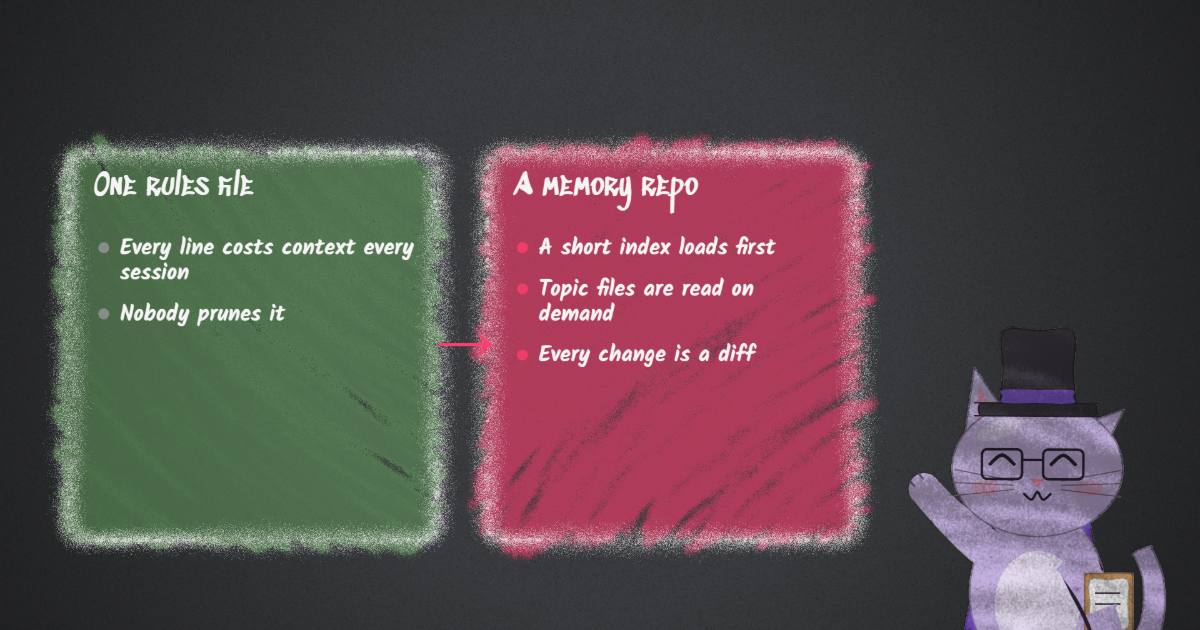
A coding agent starts every session knowing nothing about you. You tell it to use bun, not npm. You tell it that schema changes ship in their own PR. Next session it has forgotten both. The obvious fix, a rules file the agent always reads, works until the file is long. Every line costs context in every session, and nobody prunes it.
Any memory system has to answer three questions:
- What does it store? Raw transcripts, extracted facts, summaries, or rules.
- How does a session find the relevant part? Load all of it, retrieve by embedding, or navigate.
- How does a fact change? Overwrite it, delete it, or mark it no longer true and keep it.
Agent Memory Repo gives plain answers. It stores short Markdown facts. A session loads one small index and navigates from there with grep and links. A fact changes by editing the file, and git keeps the old version.
The format, concretely
A memory repo is a git repository. The version I first read called its root the memory root. Layout is free: the spec allows "Markdown notes, SQL queries, scripts, and other files". This is the spec's example:
memory-joe/              ← memory root
  MEMORY.md              ← entry point (required)
  team_structure.md
  using_datadog_mcp.md
  projects/
    payments.md
    website.md
  billing/
    count_paying_customers.sql
MEMORY.md is the one required file. "Agents load it at the start of every session." The spec says to keep it short. The version I first read also put entries every session needs at the top. Links to everything else go under an ## Index heading:
# Memory: Joe

- Joe leads the product team [source: https://example.com/sessions/100]

## Index
- [[team_structure]]
- [[projects/payments]]
- [[projects/website]]
An entry is one bullet on one line, with optional metadata at the end. Metadata is [key: value; key: value]. Keys are open. Two are recommended: source, a link to the agent session where the fact was learned, and added, the date it was saved as YYYY-MM-DD.
- Joe coordinates the billing launch [source: https://example.com/sessions/101]
- Payments and website share a 2026-10-15 launch deadline [source: https://example.com/sessions/102; added: 2026-09-03]
Cross-links are [[path]]. Paths start at the memory root. You omit .md for Markdown and keep any other extension, so [[billing/count_paying_customers.sql]] points at a saved query. "Keep information in one place and link to it elsewhere." When a file moves, the agent updates the links.
Several repos can share one session. Alice's memory is cloned at session start. When Bob joins, his memory is cloned beside it, only if he chooses to share it. Each repo keeps its own MEMORY.md, permissions and history. A [[path]] resolves from the root of the repo that contains it. The agent writes Alice's preferences to memory-alice/ and Bob's to memory-bob/, and it asks when the destination is unclear.
That is the whole spec. There is no YAML frontmatter anywhere in it: no type, no description, no schema version. That matters for the comparison later, because both Claude Code and Letta put frontmatter on every memory file.
The widget reads one line the way the spec describes. The presets come from SPEC.md, the README and the cognition.com page, plus one edge case I made up. Three of them hit places where the four-sentence grammar leaves the reader to decide.
The page's own swarm example writes an entry with three separate [source: …] brackets. SPEC.md describes one bracketed list. The same example nests replies as indented sub-bullets ("Cache answers: yes…"), and the spec never says whether an indented bullet is an entry. The ; separator has no escape, so a URL that contains ; is cut in two. None of this breaks an LLM reading the file; a model reads around it. It does mean two tools that both claim to parse the format can disagree on the same line. A reference parser or a conformance test would settle it, and the repo has neither (measured: the clone holds Markdown, a JSON manifest and a licence, and no parser or test code).
"Graph relationships" are links between files
The graph is the set of [[path]] links. A node is a file, not an entry, and an edge has no type. [[team_structure]] says "see that file". It cannot say "reports to", "replaced by" or "contradicts". The launch video shows exactly this: after dreaming, notes in different folders are joined by plain curves.
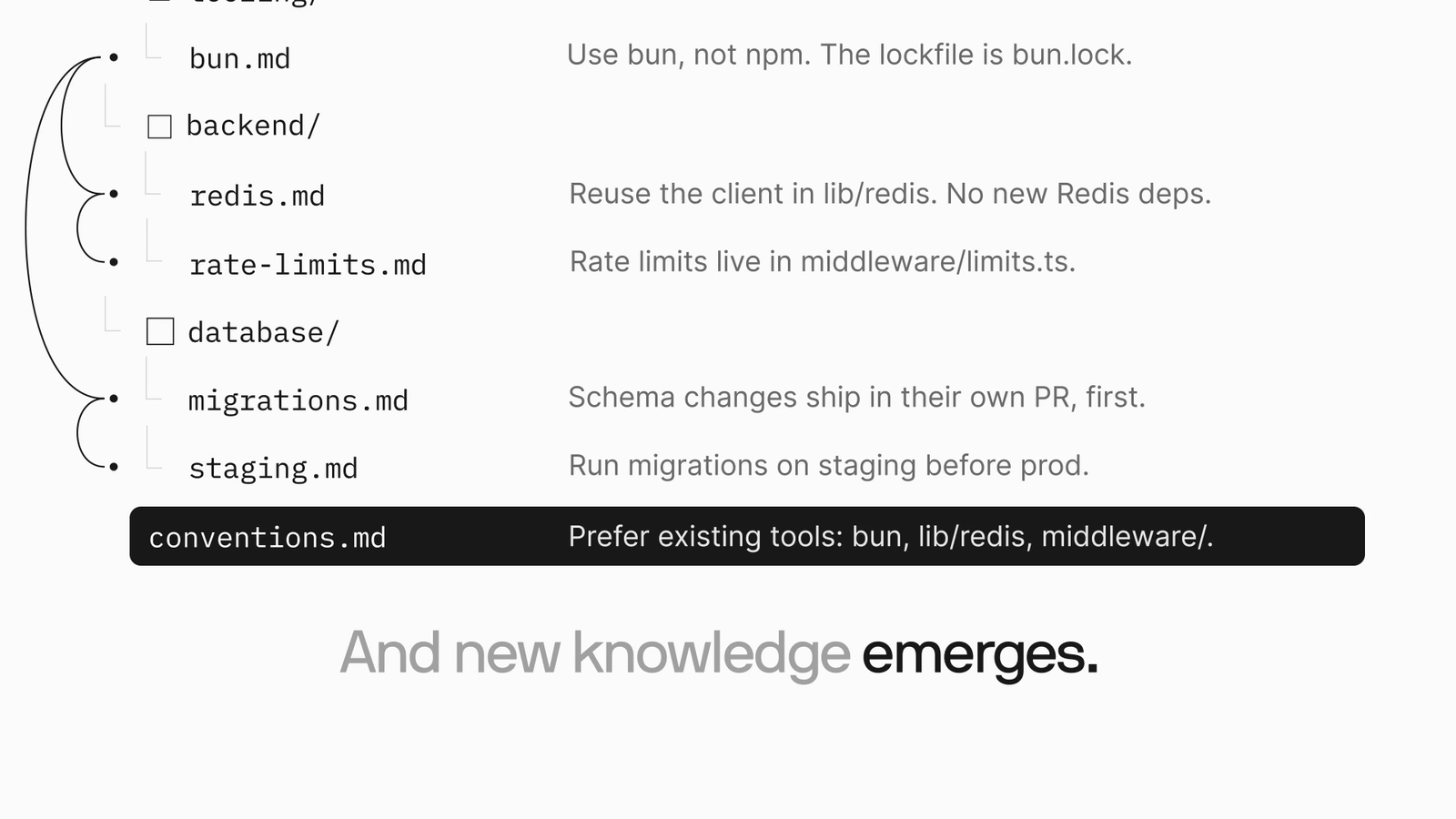
That is a weaker graph than "knowledge graph" usually means, and it is a deliberate trade. A typed graph needs a schema and an extractor that fills it. A file graph needs an agent that can write [[...]], which every agent can. Anyone who keeps an Obsidian vault will recognise the shape. The reply asking "How is this different from Obsidian" is fair. The answer is the root-relative paths, the one-line entries with source links, and git.
History lives in git, not in the format
The spec's whole rule for changing a fact is one line: "Update or remove entries when the information changes." The skill makes it stricter: "Edit files in place. Update or remove entries that are out of date instead of adding a contradicting entry."
So the working tree is always the current belief, and only the current belief. There is no superseded_by, no valid_until, no removed key. The only time-like key is added. "Updates over time with historical records" means the record lives in git. Asking when the dev-server port note came and went is a pickaxe search:
$ git log --format='%h %s' -S'port 3001'
535bfb9 dream: drop dev-port
f9bd7f0 remember port
371bad7 init
That output is from my scratch repo (measured). It is a good design for one reason: the history costs nothing at session start. The agent loads a small current index and digs into history only when it asks. It has a cost too. An agent that reads only the working tree cannot tell "never knew this" from "knew this and deliberately forgot it." One reply under Walden Yan's post asked exactly that: "Does the format have tombstones for deleted memories? Otherwise an agent importing an older clone can bring back something the user explicitly asked to forget." It does not. The next section shows when that matters.
Concurrency: the memory loop under real git
The spec's memory loop is four steps: clone the latest memory, grep or follow links, update entries "with no human in the loop", commit after every edit. The cognition.com page phrases the steps as clone, search, update, push. Devin's own drive adds a revision check, shown in the launch post's interactive figure: a session whose checkout is behind is refused, merges, and saves again.
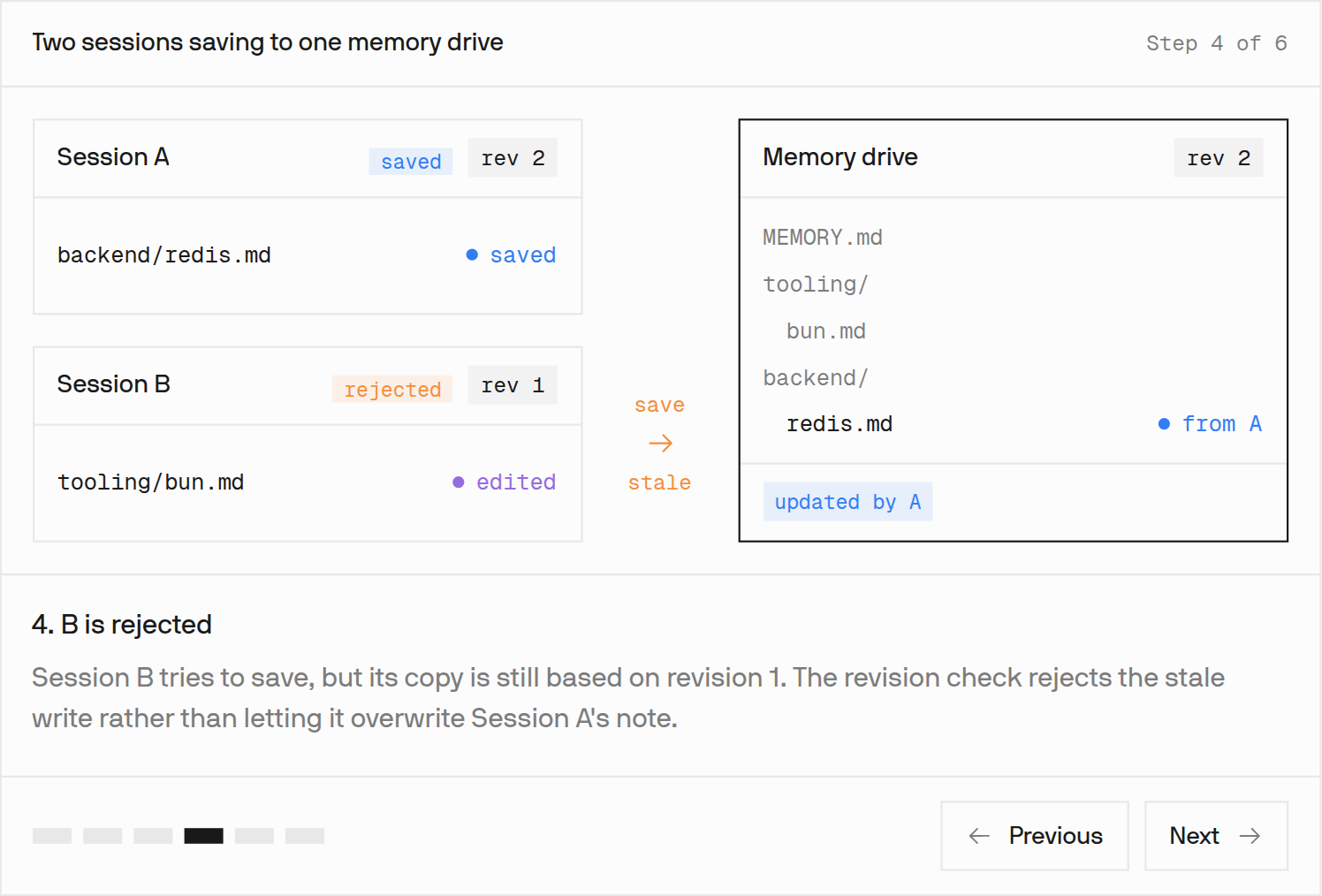
The cognition.com page describes the swarm case like this: "Git merges most of their commits. When two agents edit the same line, git rejects the second push, and that agent reads both versions before writing one." That is close, but not what git does. Git rejects every push from a checkout that is behind, whatever lines it touched. The merge that follows is where lines matter, and the conflict condition is wider than "the same line". I ran six cases in a bare repo with two clones, letting session A push first and having B commit from the older checkout and pull (measured, git 2.43.0):
| Case | Result of B's git pull --no-rebase |
|---|---|
1. A and B each append one bullet to the end of findings.md | CONFLICT |
2. Same, with findings.md merge=union in .gitattributes | clean, both lines kept |
| 3. A and B edit different files | clean |
| 4. A (dreaming) deletes an entry; B never touched it | clean, entry stays deleted |
| 5. A deletes an entry; B edits that line | CONFLICT |
| 6. A deletes an entry; B writes the same fact into a new file | clean, fact is back |
In cases 1 to 3 I also had B push before pulling, and git refused the push as non-fast-forward every time. That includes case 3, where nothing overlaps.
Case 1 matters most for the swarm example, where four agents "write to the same two files the whole time". Two appends at the end of a file insert at the same point, and git refuses to choose an order. Every pair of concurrent appends conflicts. The agent can resolve it, since it is two bullets and both are kept, but that is an LLM round-trip per collision. One line of .gitattributes removes it for log-like files (case 2). One file per agent, as the swarm example's agents/ folder already does, removes it too (case 3). The spec mentions neither.
Cases 4 to 6 answer the tombstone question. A stale clone does not bring a deleted fact back by merging (case 4). Three-way merge sees that it never changed the line. An edit to the deleted line is a real conflict (case 5), and the spec gives the resolving agent nothing to decide with. The bad case is 6. An older session re-learns the fact from its own stale context and writes it somewhere new. Git sees a new line in a new file, and the fact quietly returns. Only a tombstone, an entry that says "removed on purpose, on this date, because of this session", could catch it. Dreaming could catch it too, if it checks new entries against past deletions in git log. Neither is specified.
Dreaming: what the posts say it does
The spec gives dreaming two sentences: a dedicated agent that runs periodically, to "add new memory" (spot patterns across sessions) and "clean up memory" (merge duplicates, remove outdated entries, and check sources to resolve contradictions). The Devin launch post is more specific. Dreaming is "a daily background session" in which Devin "reviews past conversations alongside its existing memory". It:
- consolidates overlapping notes,
- removes transient details,
- looks for lessons that weren't captured during the original work,
- removes stale memory records that no session used.
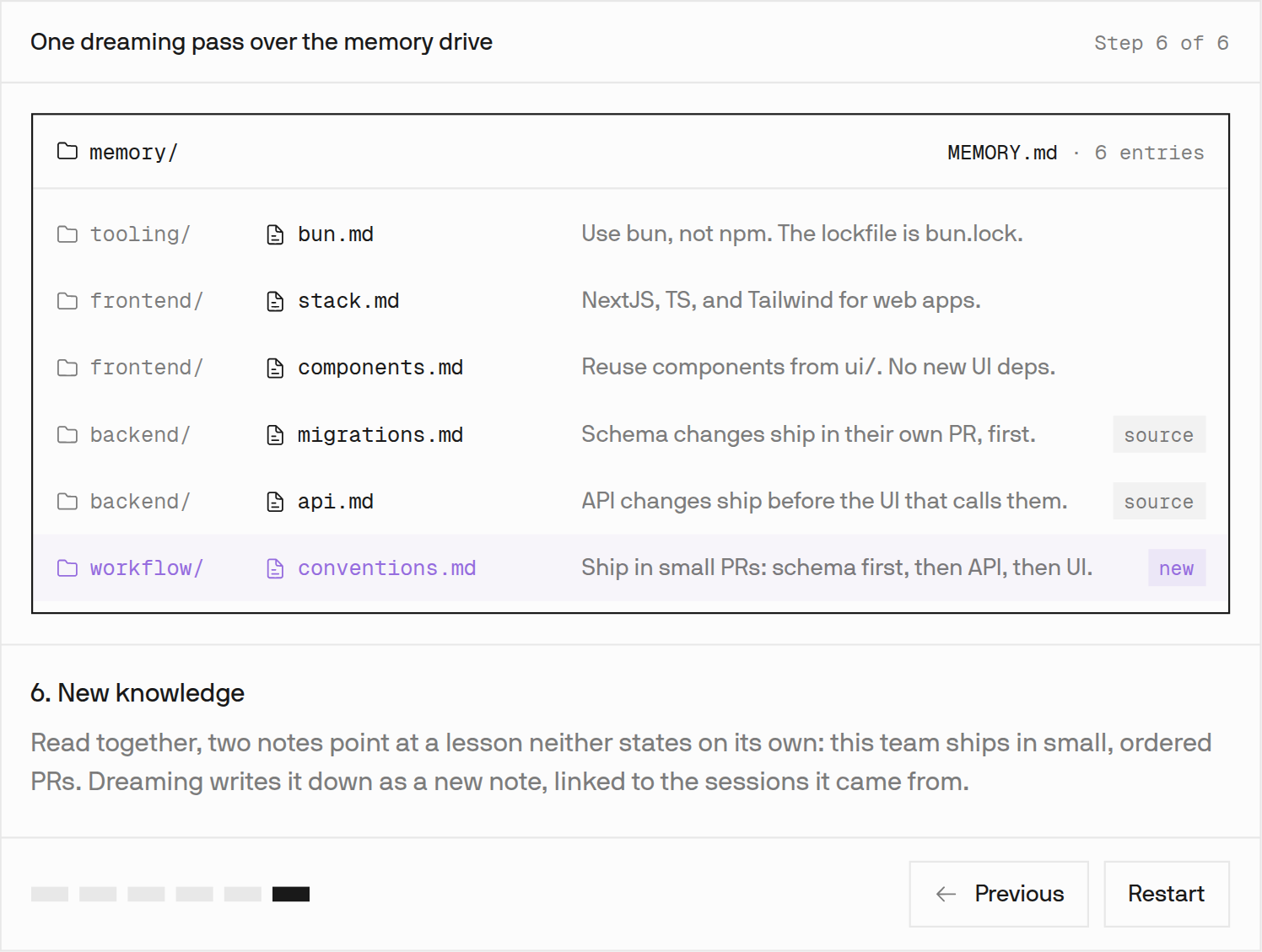
The post's second interactive figure steps through one pass. Seven flat notes from a week of sessions go in. landing-page.md and styling.md describe the same web stack, so they merge into stack.md, and the links to both source sessions are kept. dev-port.md ("Dev server was on port 3001 this afternoon") is unused and transient, so it is dropped. The rest are regrouped into tooling/, frontend/ and backend/, and the index is rewritten. Then two notes about ordering produce a third that neither states: ship in small PRs, schema first, then API, then UI.
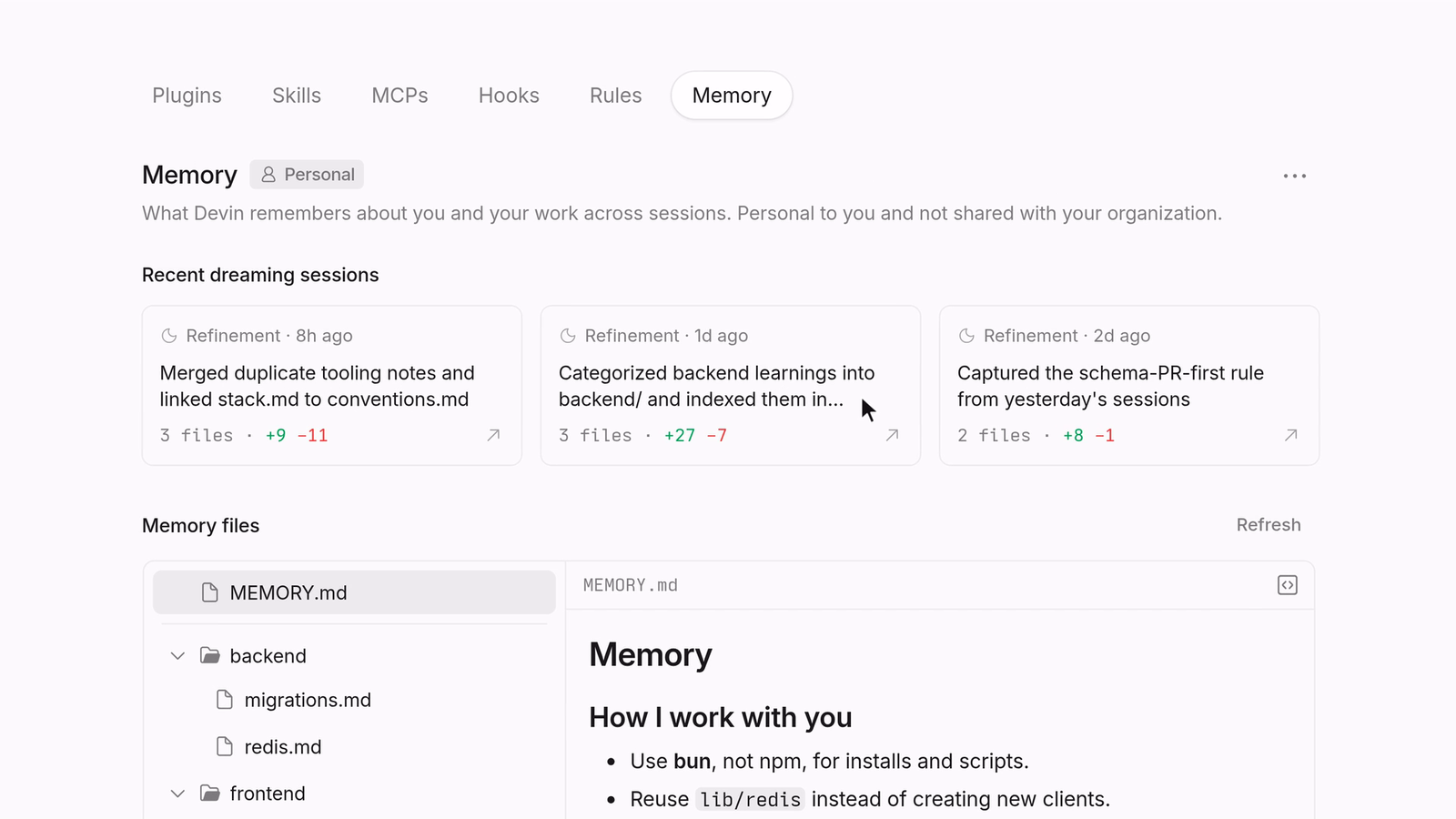
In the product, each dreaming run shows up as a card under Customize → Memory, with a one-line summary and a diff size. The demo clip shows runs such as "Merged duplicate tooling notes and linked stack.md to conventions.md", with three files changed.
Three things are worth stating plainly.
The cadence is described three ways. "At night" (Cognition's post), "a daily asynchronous process" (the launch blog), "runs periodically" (the spec). They are compatible. Only the spec's wording binds anyone else.
Dreaming is not in the open repo. The skill says so: "This skill does work only when it is invoked. It doesn't add hooks, scheduled jobs, or startup scripts." The cognition.com trial ends with "Automatic startup and scheduled Dreaming are not included." The open part is the format and a skill for reading and writing it. The consolidation prompt, the "unused by any session" signal and the scheduler stay inside Devin. Someone else has since written an open one, which I cover after the next point.
There are no numbers. Neither post reports how much dreaming shrinks memory, whether it improves task success, or how often it deletes something a user wanted kept. Cognition's thread says a swarm of Devins "using the memory as a way to coordinate at large scale without us prompting them" appeared in early experiments, with no data attached. The one number in the replies is a user's anecdote. Claude Code kept a project's memory for 10 days, then a fresh Devin session dreamed on it: "21 commits, 19 → 14 notes, duplicates merged" (reported, a reply on X, not checked). It is a plausible demo of the format crossing agents. It is not an evaluation.
Supermemory wrote the missing dreamer
I finished the sections above thinking the interesting half of this launch was locked inside Devin. On 8 October Dhravya Shah, who runs Supermemory, posted MemoryRepo.dev: "an open source implementation of Cognition's dreaming memory system". The repository, supermemoryai/memoryrepo, is a single commit, 54f7ff3, made at 23:37 PDT on 5 October, the evening of Cognition's launch. It holds 41 files under an MIT licence, and its README says the technique "follows Cognition's agent memory repo, applied to personal memory."
- license
- MIT
- branch
- main
- tests
- none found
- source
- 218.9 kB
- commit date
- 2026-10-06
by size of tracked source at this commit, file counts in brackets; docs, data and vendored trees excluded
local clone, 2026-10-08 at 54f7ff3 — branch, commit, commitDate, fileCount, hasTests, languages, license, licenseFile, shallow
shallow clone: counts describe the pinned tree, not the history
So this is the first dreamer anyone can read for this format, and I read all of it. It is a chat app, not a coding agent. You tell it about your life, it keeps a memory repo of you, and a background agent tidies that repo up. The questions I left open above can now be asked of code instead of a launch post.

The design splits the work between two Cloudflare Durable Objects. A ChatAgent per conversation answers you. A MemoryAgent per user owns the git repo, and every write goes through it in order (memory-agent.ts:308-314). In chat the model gets MEMORY.md in its system prompt, a read-only shell over the repo, and three write tools, memory_write, memory_edit and memory_delete, each of which is one commit pushed on the spot. The dream is a separate agent loop over a writable in-memory copy of the repo plus an /inbox of chat messages and notes it has not seen yet. Its tools are bash, write_file, read_source and commit, and it gets at most 40 steps (memory.ts:22). A Durable Object alarm runs it every four hours (memory-agent.ts:12), and the run is skipped when the inbox is empty (memory-agent.ts:367-369). There is also a Dream now button.
What the dream is told to do
Cognition's spec gives dreaming two sentences. memoryrepo turns them into a prompt almost word for word, and adds one rule. The cleanup job, from memory.ts:77:
Clean up memory. Merge duplicates, remove outdated entries, fix broken or missing [[links]], keep MEMORY.md short. When entries contradict each other, check their sources with read_source and keep what the conversation actually says (the most recent statement wins unless the source shows otherwise).
The rule it adds is the tiebreak, and recency is a reasonable default for personal facts. What makes "check sources" more than a slogan is read_source. Given thread/<id>#<message>, it returns the cited message with three messages either side, capped at 8,000 characters (transcripts.ts:94-99). A dream can actually go back and reread what you said, which is the step the spec describes and nothing in Cognition's open repo performs.
Two things the prompt does not have surprised me more. There is no usage signal. Devin's post says dreaming drops records "that no session used"; nothing here records which entries a chat read, so "outdated" is purely the dream model's judgement. And deleting is just rm in the sandbox. The conventions add one line about history, "Memory states the current truth; if history matters, say so in the entry ("moved to Berlin in Sept, was Paris")" (memory.ts:46). That covers a changed value. It does nothing for a deletion.
The source format: stricter, and local
memoryrepo keeps the spec's grammar exactly, [key: value; key: value] at the end of a bullet, and is stricter about it: "Always include source and added" (memory.ts:44). The UI turns a source into a clickable chip only when it is a thread/ or note/ reference (src/web/Markdown.tsx:26-29); a source written the spec's way, as a URL, stays plain text.
It diverges on what a source is. The spec asks for a link to the agent session. memoryrepo writes thread/ab12cd34#m9 or note/<id>: a reference to one message, not a session, which is finer and which the dream can resolve. But the transcripts it points into live in Durable Object SQLite, not in the repo. Clone the memory with plain git, which the README says you can, and every source becomes a pointer you cannot follow.
Links bend the spec too. resolveLink tries the exact path, then any path ending in the target, then any file with the same bare name (src/shared/links.ts:14-22). That is Obsidian's behaviour; the spec says paths start at the memory root. Shah said as much under his own post: "This is not really a graph, it's just things pointing to each other in a way, quite simple, like obsidian".
The rule is enforced by prompt only, and the launch image shows it slipping. The last bullet of that MEMORY.md ends [added: 2026-10-06] with no source at all.
Concurrency without git merge
memoryrepo never calls git merge. The MemoryAgent keeps HEAD in memory, and each chat turn starts from it (chat-agent.ts:63). When a chat write arrives and HEAD has moved since the turn began, it compares every file the write touches at the turn's starting commit and at HEAD. If any differ, nothing lands, and the tool hands back the current text (memory-agent.ts:326-329), with an instruction to "write one version that keeps what's true from both, and retry once" (memory.ts:58). A dream finishes with a file-level three-way rebase:
// src/server/memory-agent.ts:411-413, for every path in the base, the dream's result and HEAD
const [was, mine, theirs] = [base.files[path], result.files[path], now.files[path]];
const value = mine !== was ? (theirs !== was && theirs !== mine ? (conflicts.push(path), mine) : mine) : theirs;
if (value !== undefined) next[path] = value;
If the dream changed a file and chat changed it differently, that file is a conflict, and one conflict drops the whole dream (memory-agent.ts:415). Its read cursors are not advanced (memory-agent.ts:426 runs only after a successful push), so the next run sees the same inbox again.
I put those two rules into a short script of my own and replayed the six cases from the git experiment through it. The results are the dashed lane in the widget above. Compared with plain git, I count two improvements and one regression.
The first improvement: conflict markers never land in memory, and a write to a different file never bounces. Git refused even case 3's non-overlapping push; here it goes straight in. The second is that a stale session can only be one turn out of date, not a whole session, because every turn rereads HEAD. Most of the "older clone" problem goes away.
The regression is granularity. The check compares whole files, so two appends to one file collide exactly like git's case 1, and there is no merge=union escape. For dreams the cost lands in an awkward place. MEMORY.md is the file the dream is told to keep short and the file chat is told to add a line to when "every conversation needs it" (memory.ts:57). A single chat save to MEMORY.md while a dream runs throws the whole dream away, after its tokens have been paid for, and it waits four hours to retry with a bigger inbox. Nothing is corrupted, but a busy user could keep a dream from ever landing. And case 6 is unchanged: a fact re-learned into a new file comes straight back, and the recency rule now favours it.
What stops a dream deleting what you wanted kept
I looked for a guard and found none aimed at the problem. There is no tombstone, no pinned file, no protected key, and no revert button. A search of the source for "revert", "restore", "forget" and "tombstone" turns up nothing. The protections are side effects of the design:
- Each dream is one commit carrying a message the model wrote, and the History tab shows its diff. The repo is a real git remote, so you can revert by hand.
- The dream cannot touch the raw conversations.
/inboxis mounted read-only (shell.ts:51) and the transcripts sit in SQLite, so a wrongly deleted fact can still be found with search orread_source. - The prompt ends "If there is nothing worth changing, say so in the commit message and change nothing" (
memory.ts:92). - A dream that collides with a chat edit, or runs out of its 40 steps without calling
commit, pushes nothing.
None of these stops a confident, wrong deletion before it happens. They let you notice it and undo it later, which is what Cognition's design offers too.
What it measures
The repo meters cost and nothing else. Every model call goes through a wrapper that records the tokens and the dollar figure OpenRouter reports (models.ts:40-75) into a usage table (memory-agent.ts:58-61). The UI shows the cost of every turn and every dream, and each account is capped at $1 a month (memory-agent.ts:19). Chat writes report their clone and push time in milliseconds. A helper to estimate tokens per file "for repo-size history" exists (vault.ts:87-96), but nothing calls it. There are no tests and no evaluation code.
The launch video shows more than the repo. It is an 11-minute talk, and around the 84-second mark Shah opens a cost tab on a local build, with strategy switches labelled markdown, compaction, full context, none and supermemory, none of which is in the published commit.
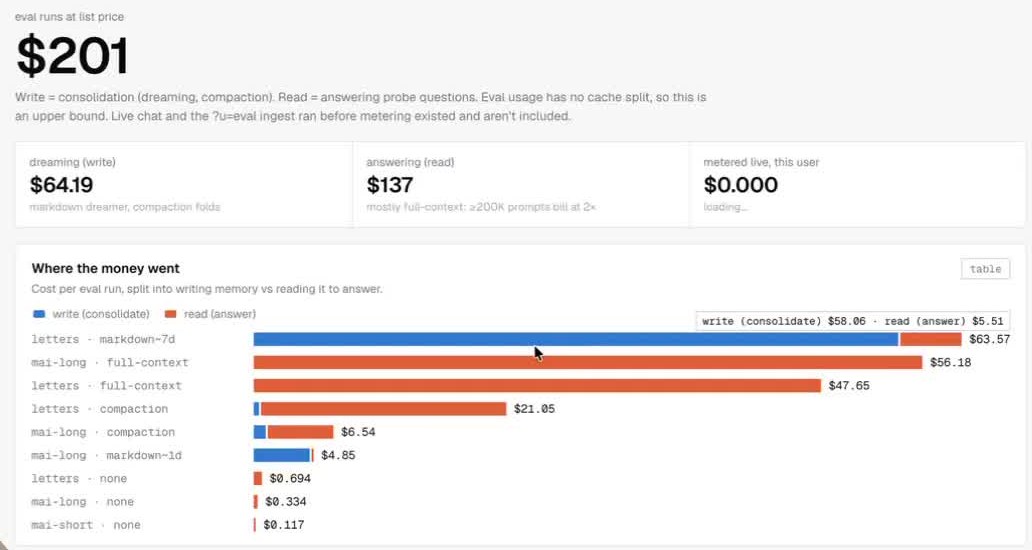
The page says the eval runs cost $201 at list price: $64.19 for dreaming and $137 for answering. It also says that is an upper bound, since "Eval usage has no cache split". The bar worth reading is the top one. On a dataset called "letters", the run labelled markdown~7d cost $63.57, $58.06 of it on writing. I read the suffix as a dreaming interval; the page does not say. That is more than putting the whole history in context ($47.65) and three times compaction ($21.05). On "mai-long" the order flips: markdown~1d cost $4.85 against $56.18 for full context. A second chart, of dreamer input tokens per new token learned, shows two bars I can just read as 218 and 161. The README states the same thing in plain words: "Dreams cost more as memory grows: the dreamer re-reads what's there before writing."
These are cost numbers from a video frame, not results. I could not find an accuracy chart in the frames I went through, and I did not transcribe the talk, so I don't know whether answer quality was measured. Even so, it is more measurement than either Cognition post published.
A fresh demo on Cloudflare parts
memoryrepo is plainly a fresh demo: one commit, no tests, email-code sign-in with a $1 cap, and the README's caveats are honest about it. One reply under the launch post found a quickstart bug within ten minutes. The curl examples call /api/users/ada/…, while a real user id carries a hash (ada-3f2a1c9b0e7d, as a comment in the README itself says). Shah frames it as research to feed back into Supermemory's own product.
The bigger difference from Cognition is where the guarantees live. memory.ts, the prompts and tools, says at the top that it is "pure: no Durable Objects, no git" (memory.ts:14), and it would port to any runtime. The concurrency rules would not. They depend on one Durable Object standing in front of the remote and serializing every write. The memory itself is a Cloudflare Artifacts repo, written with isomorphic-git; chat history, the cost ledger and full-text search are Durable Object SQLite; sign-in goes through Cloudflare Email Service; and deployment is Alchemy 2.0.0-beta.81 (package.json). An outside agent following Cognition's clone, edit and push loop can still push to that remote. The MemoryAgent then gets an error on its own next push and rereads HEAD (memory-agent.ts:336-339); it does not merge. Cognition's spec assumes many clones pushing to one remote. memoryrepo assumes one writer guarding it. The files are the same format either way, and that is the part of Cognition's pitch this demo bears out: a second team built a different dreamer against the same Markdown in a day.
How it compares
None of this is new as an idea. What is new is a written, MIT-licensed spec with a plain-text format.
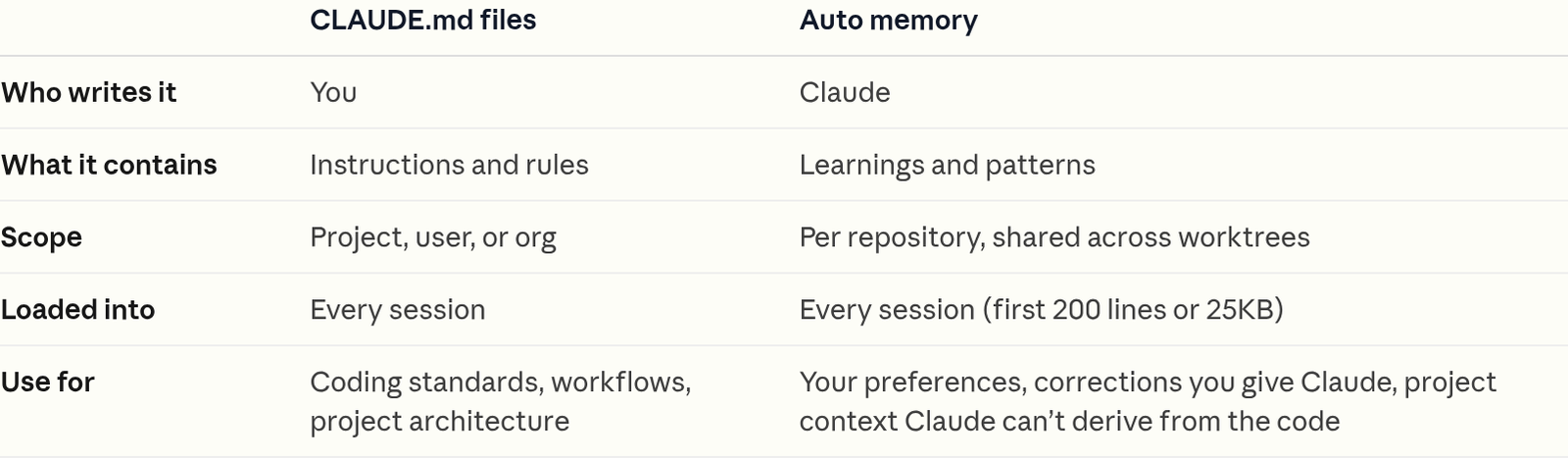
Claude Code's auto memory is the nearest sibling, and the shapes are close. Each project gets ~/.claude/projects/<project>/memory/ with a MEMORY.md index, "one line per memory, loaded into every session", plus one topic file per memory, read on demand. The first 200 lines or 25 KB of the index load at session start (reported, Claude Code docs). The differences: each memory file carries a type field in frontmatter (user, feedback, project, reference), the directory is "machine-local" with no git and no sharing, and the docs describe no scheduled consolidation. Claude Code nudges the model to merge or drop stale entries when the index nears its limit.
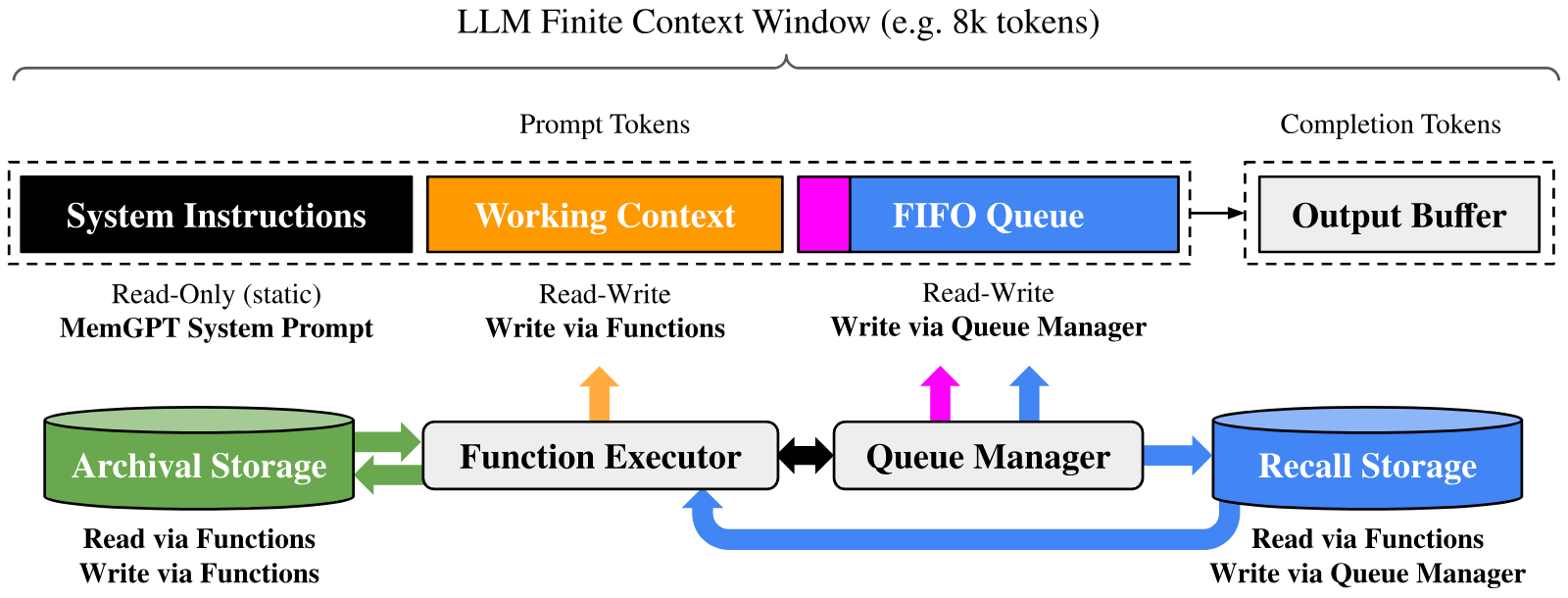
Letta got here first on almost every axis. MemGPT (arXiv 2310.08560) framed memory as an operating system's paging problem. A fixed context window holds system instructions, a read-write working context and a FIFO message queue, and the model moves data to and from archival and recall storage through function calls.
In February 2026 Letta rebuilt Letta Code's memory as Context Repositories. It is a git-backed memory filesystem cloned locally, "every change to memory is automatically versioned with informative commit messages", and subagents work in their own git worktrees and merge back. It has a background "sleep-time" reflection process and a defragmentation skill that merges duplicates and restructures memory into "a clean hierarchy of 15–25 focused files" (reported, Letta blog). Two replies under Cognition's post made the same point, one of them bluntly. Letta's files carry a frontmatter description, and a system/ folder marks what is always loaded.
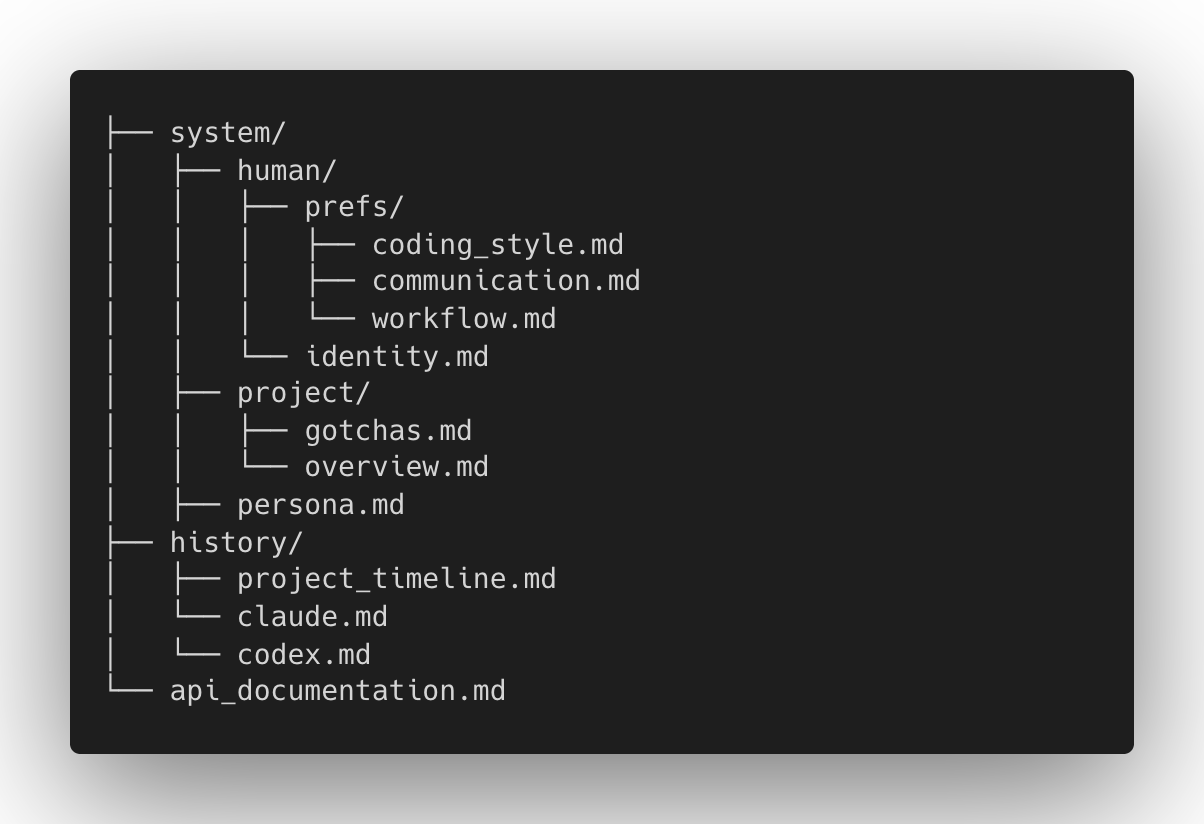
The honest comparison: Agent Memory Repo is close to Letta's context repositories with less structure. It has no frontmatter and no pinned folder, and it adds [source:] provenance per line and the multi-repo composition story. Letta's idea that sleep-time compute can do useful work between requests has its own paper (arXiv 2504.13171).
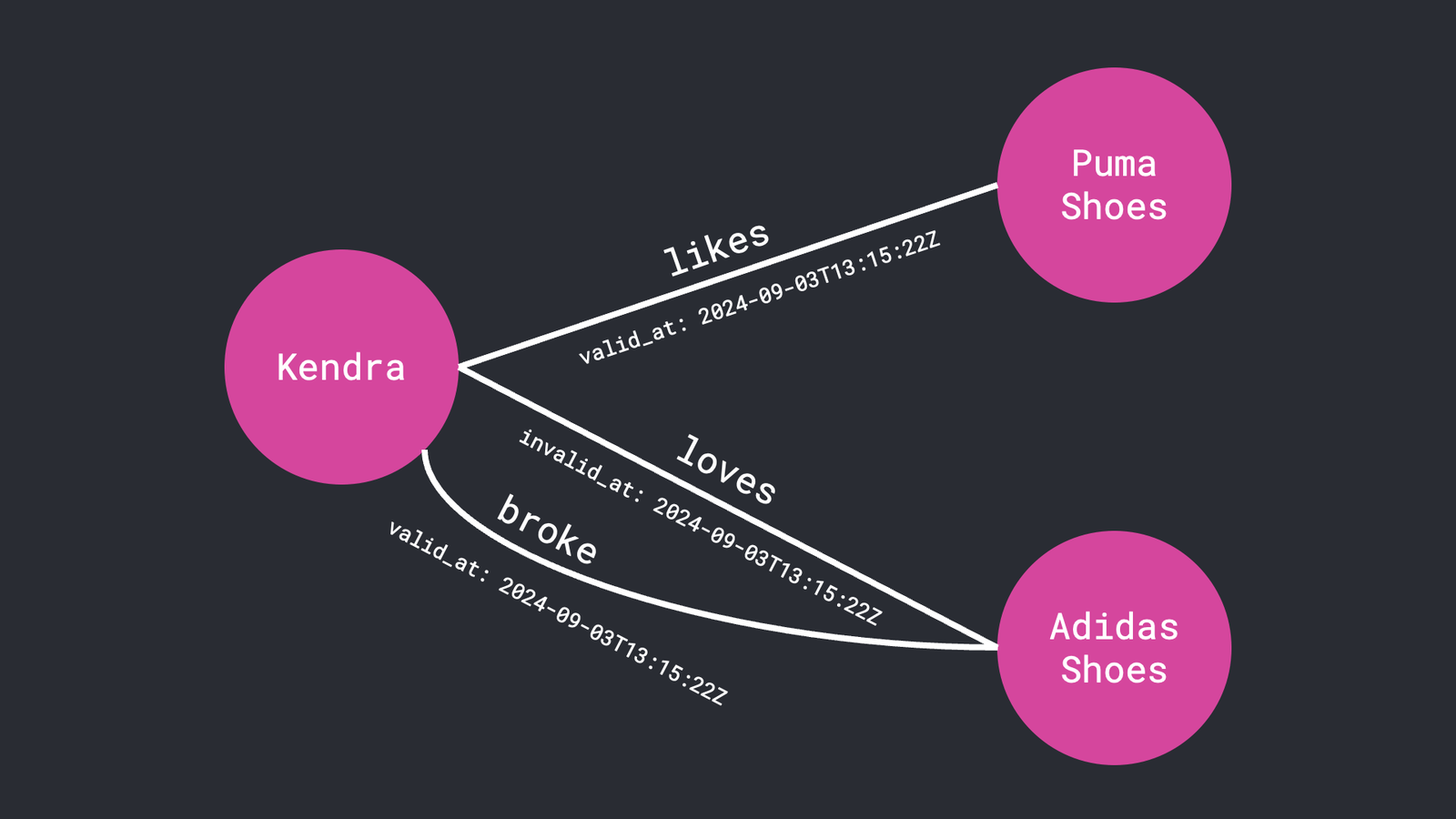
Zep's Graphiti sits at the other end. It is a typed, temporal knowledge graph (arXiv 2501.13956). Every fact is an edge with four timestamps: when the system created and expired it, and the interval during which it "held true". When a new edge contradicts an old one, Graphiti does not delete anything. It "invalidates the affected edges by setting their to the of the invalidating edge." That is supersession inside the data, where any query can see it, which is exactly what Agent Memory Repo leaves to git log.
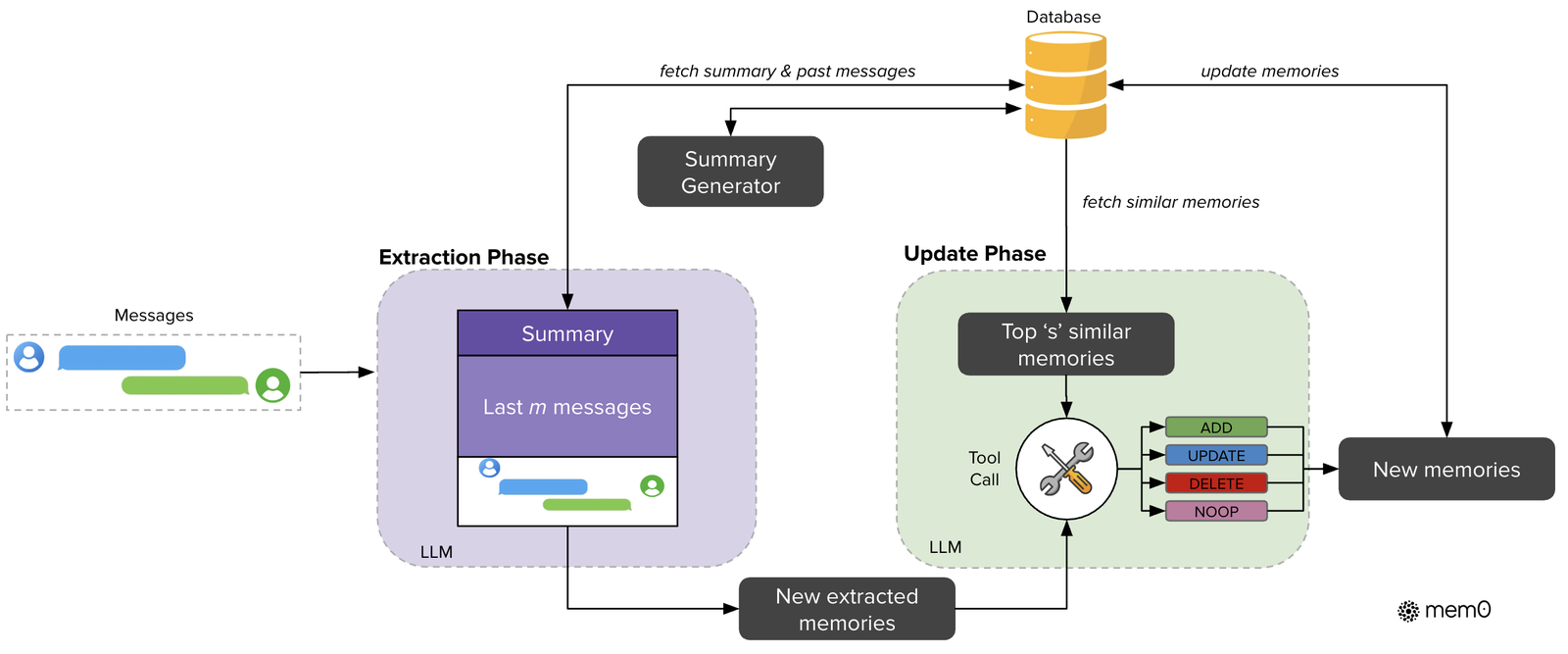
Mem0 (arXiv 2504.19413) is the extraction-pipeline version. An LLM extracts candidate facts from each exchange, retrieves the most similar stored memories, and picks one of four operations: ADD, UPDATE, DELETE or NOOP. In base Mem0, DELETE removes the contradicted memory. The graph variant marks conflicting relationships "as invalid rather than physically removing them to enable temporal reasoning."
| Store | Unit | Links | When a fact changes | Consolidation | Open | |
|---|---|---|---|---|---|---|
| Agent Memory Repo | git + Markdown | one-line bullet | [[path]], file to file, untyped | edit or delete; old text in git log | dreaming, described, not released | spec + skill, MIT |
| Supermemory memoryrepo | git (Cloudflare Artifacts) + Markdown | one-line bullet, source and added required | [[path]], also resolved by bare name | edit or delete; old text in git history | dreaming every 4 h when there is new input | MIT, one commit |
| Claude Code auto memory | local Markdown | one file per memory, type frontmatter | index lines | edit or delete | nudged at the index limit | docs |
| Letta context repositories | git + Markdown | file with description frontmatter | folder tree | edit; git history | sleep-time reflection, defrag | Letta Code |
| Zep / Graphiti | graph database | typed edge with 4 timestamps | typed edges | old edge stamped invalid | entity resolution, community summaries | Graphiti open source |
| Mem0 | vector store (+ graph) | extracted fact | graph variant only | UPDATE / DELETE; graph marks invalid | on every write | open source |
Every row is reported from the cited source. I did not run Graphiti, Mem0 or Letta for this piece.
Checking the claims
- "Support graph relationships." Holds, if a graph means untyped links between files. It is not a knowledge graph in Graphiti's sense, and per-entry links do not exist.
- "Updates over time with historical records." Holds through git, not through the format. The working tree has no record of what was superseded.
git log -Sdoes. - "Backed by git and markdown." Holds, and it is the strongest part. A memory change is a diff, which a person can review, revert or blame. The Devin UI shows each dreaming run as exactly that.
- "You can use it with any agent." Holds for reading and writing. The format is plain text, and the skill installs into Claude Code, Cursor and Devin. Cognition's dreaming is not portable, because it is not released. Supermemory's memoryrepo shows another team can write a dreamer against the same files.
- "Git flags any edits that conflict." Half true. Git also conflicts on edits that do not overlap, such as two appends at the end of one file (measured, case 1). It flags nothing when a stale session re-learns a deleted fact (measured, case 6).
What I would do with it
I would use the format. It is small enough to hold in your head. A source link on every fact is the right default, and memory you can git revert beats memory you cannot see.
I would add three things the spec leaves out. Put merge=union on any append-only file, or give each writer its own file. Add a removed entry instead of deleting what a user asked to forget, so dreaming and other sessions can see the decision. And add scope as a metadata key, since "this repo", "this task" and "every project" are different facts. Keys are open, so all three fit in today's spec. Whether two tools would agree on them is the open question an open standard is supposed to answer. With 13 commits and no parser in the repo, it has not answered it yet.
Related on this site: Hindsight organises memory into four typed networks and benchmarks it. TencentDB Agent Memory sorts its tiers by how often they change. MemHarness argues retrieved memory should be rewritten before use, not replayed. Agent harnesses covers why durable agent state belongs in files. And Dream-RSI is a different "dreaming": a loop that rewrites a search scheduler, not a memory.